
Welcome to Hollywood’s Next Great Disruption
From Sci‑Fi to Studio Reality: AI’s Rapid Adoption
Artificial Intelligence—once the staple of sci-fi thrillers—is now permeating Hollywood’s production pipelines. A 2023 Bain & Company study projects that integrating AI and related technologies could shave 15–20% off blockbuster budgets, potentially tens of millions with scale. Meanwhile, rocketing urgency to optimize workflows has prompted studios to apply AI in everything from automated script analyses to virtual location scouting and asset generation.
However, this isn’t a mere one-off trend: Deloitte’s 2025 outlook suggests that while only ~3% of top-tier Hollywood budgets will fund AI-generated creative content, 7% will be funneled into operational AI across legal, marketing, localization, and planning areas. That means nearly 10% of mid–large studio costs are earmarked for AI tools within the next 12–18 months, exactly where producers, VFX leads, and talent scouts should sharpen their focus.
H3: Why Directors, Producers, VFX Crews, and Actors Must Adapt Now
Why does this matter now?
- Cost & Time Efficiency: AI-assisted tools are slashing weeks off production schedules and enabling micro-adjustments (like color-correction, ADR, and editorial cuts) instantaneously, reducing reliance on massive crews and costly reshoots.
- Competitive Pressure: As indies and social-content creators harness generative AI, they’re encroaching on traditional studios’ release windows and audience time, putting pressure on legacy players to adapt or cede attention.
- Creative Ecosystem Shift: From writer rooms to VFX suites and talent rosters, everyone must understand AI’s implications—whether it’s augmenting script analysis, matching virtual actors, generating previs, or delivering globalized content at scale.
In short, AI isn’t a sci-fi novelty—it’s becoming the industry’s backbone. The key question isn’t if Hollywood will use AI, but how deeply its creative and logistical DNA will absorb it.
Writing with Machines — AI’s Influence in Script Development
The Rise of AI-Assisted Screenwriting Tools
AI is no longer a futuristic assistant—it’s already integrated into modern writers’ toolkits. Tools like Sudowrite, ScriptBook, ScriptReader.ai, and Filmustage are redefining how scripts are drafted and refined. Sudowrite uses advanced GPT‑based models to help writers overcome writer’s block, generate descriptive prose, and refine narrative beats. Meanwhile, tools like ScriptBook and LeyLine’s platforms analyze narrative structure, pacing, dialogue coherence, and emotional tone, flagging potential plot holes or underdeveloped arcs before production begins. ScriptReader.ai specifically scores your script—and claims “If you can’t make your script at least 30% better…you’re not doing your job”—delivering insights on scene strength, emotional journeys, loglines, and more.
Can AI Really Grasp Story Arc, Tone, and Emotional Pacing?
Yes—and AI does it at scale. LeyLine’s guide asserts that tools now “identify plot holes, underdeveloped characters, and pacing issues during early drafts”. Filmustage’s AI breaks down scripts in minutes, tagging VFX cues, characters, props, and locations—then synthesizing analysis and budget reports. NolanAI, a newer pre-production suite, compares your draft against thousands of produced films to generate plot-hole flags, pace graphs, and even audience-appeal forecasts—empowering teams to adjust narrative flow before moving into production. This empowers writers and producers to validate emotional arcs and pacing with real-time data rather than relying solely on intuition.
Script-to-Budget Pipeline—Automated Breakdowns, Budget Estimates & Scheduling
The AI influence extends beyond narrative to logistics. Filmustage integrates script breakdowns directly into scheduling and budget tools—auto-tagging scenes, props, and VFX elements, then generating call sheets and shooting schedules. This drastically cuts pre‑production time from days to hours. Over at NolanAI, stage one analytics produce beat sheets, shot lists, and even pitch-deck slides at the click of a button, enabling streamlined workflows for indie teams and studio producers alike.
Human + Machine Collaboration—Case Studies from Real Writers’ Rooms
Screenwriters across formats—from features to serialized dramas—are using AI as a creative partner rather than a replacement. Reddit users share how ScriptReader.ai “looks at things I never thought to be paid attention to…now I go back to every scene I thought was brilliant and realize it could still be better”. Meanwhile, tools like Saga (mentioned in r/WritingWithAI) offer AI-driven beat sheets, formatted scene editors, and storyboard assistants, while preserving human control over voice and narrative direction. This hybrid model lets writers retain creative leadership while benefiting from accelerated insight cycles.
Tension and Trust—Writer’s Guild, Copyright, and Data Ethics
AI-generated scripts aren’t free from controversy. Writer’s concerns include content scraped from copyrighted material and unclear attribution of IP. While tools like Sudowrite demand writer awareness to refine machine suggestions, production teams and the WGA are actively negotiating standards: how much AI assistance requires disclosure, who owns AI-generated content, and how to compensate writers fairly. As usage grows, so too will frameworks on transparency, credit, and ownership.
Casting in the Algorithmic Era — Smart Analytics & Inclusivity
Predictive Casting — Talent Matching Based on Industry & Audience Data
Studios and agencies are harnessing AI-driven analytics to enhance casting precision. By cross-referencing box office history, streaming engagement, social sentiment, and demographics, predictive casting tools can reduce the risk of misalignment by up to 30%, potentially saving millions. Platforms analyze variables like an actor’s genre resonance, audience demographics, and prior box office performance to forecast compatibility. This empowers producers to make data-backed casting decisions that align with target audiences and budget strategies.
Democratizing Discovery — TikTok, Reels & AI-Enhanced Self-Tapes
The barrier between emerging talent and major productions is dropping thanks to social media and AI-integrated self-tape platforms. Apps like Slatable streamline submissions by offering pro-level slates, custom file naming, built-in teleprompters, scene audio, and even voice-altering AI—all within one interface. Casting directors and talent agencies are increasingly reviewing TikTok and Instagram Reels clips as proxy auditions—some casting calls now state “TikTok submission accepted.” One indie lead was discovered from a 60-second performance selected from over 5,000 clips, a feat that traditional open-casting workflows would struggle to match.
“thank u so much @Slatable | actor self tape app ! You’ve really made taping so much …” was a TikTok user’s spontaneous testament to Slatable’s influence on audition ease.
This trend isn’t just anecdotal—Backstage now endorses Slatable for simplifying the self-tape process and boosting actor professionalism. The tools don’t just democratize access but elevate the quality of submissions, allowing directors and producers to sift through vast talent pools quickly and fairly.
AI-Generated Auditions — Digital Twin Tech & Remote Casting
Beyond script evaluation and self-tapes, AI-powered auditioning is embracing the next frontier: digital twins. Advanced platforms use facial scanning, deepfake techniques, or real-time engines (e.g., Unreal or Unity) to create virtual actor proxies for auditions. This enables remote casting with simulated performances—even voice and movement can be represented, offering early visualizations for directors and producers.
This technology facilitates:
- International talent casting without travel
- Early-stage stunt or performance doubles for pre-vis workflows
- Pandemic-safe casting and quarantine-friendly workflows
However, it also introduces technical and artistic challenges: ensuring the digital avatar captures emotional nuance and performance nuance, and balancing reliance on digital proxies with the authentic chemistry of live actors.
Developing AI‑Driven Production Plans
Script‑Ready Budgets & Schedules via Automated Tools
AI-driven platforms such as Filmustage, NolanAI, RivetAI, and Saturation.io are transforming pre-production logistics:
- Filmustage can complete a full script breakdown—including characters, props, locations, costumes, and VFX cues—in just 2 minutes, generating shooting schedules, call sheets, and partially built budgets automatically—saving days of manual labor.
- NolanAI extends this capability, scanning scripts to forecast budget requirements and estimate shooting logistics, supported by machine‑learned models trained on historical production data.
- Saturation.io claims to have streamlined over $2 billion in film budgets across 5,000+ productions, offering real-time collaboration on budgeting, expense tracking, and financial actualization.
- RivetAI, spun out from End Cue Studios, uses AI to produce coverage reports and schedule estimations, with direct export compatibility to tools like Movie Magic Scheduling.
Studios using these tools report up to 30% reduction in upfront planning costs and dramatically compressed scheduling cycles, allowing production teams to pivot fast and reduce risk early on.
Location Scouting and Set Concept Art Created by Generative AI
The scouting and art departments are getting AI-enabled upgrades:
- Startups like Massif Network, SuperScout.ai, and Sora leverage AI to analyze location databases and match them to script tone, light conditions, and visual references. One pilot found physical visits reduced by 45%, with faster approvals and reduced travel costs.
- AI tools also assist concept artists and previs designers—using text prompts from scripts to generate multiple stylistic treatments or storyboard frames within an hour, enabling iterative creative exploration far faster than traditional sketch-based workflows.
Economic Intelligence: Real‑Time Budget Optimization
AI now embeds itself in the live heartbeat of production finances:
- Tools like Saturation.io and NolanAI continuously assess actual spending against projected budgets—flagging overruns in equipment rentals, talent spend, or location fees within days or even hours—allowing for immediate corrective action.
- New entrants like Europe’s Wonder—backed by $3 M from Blackbird Ventures—aim to disrupt production economics by offering AI-driven asset creation, promising to reduce costs from $500K–$1M per finished minute to as low as $10K–$ 20K.
- Additional AI offerings are emerging to evaluate location logistics (weather, crowd flow, sunlight) in real-time, further optimizing shoot-day planning and staffing allocations .
Integration & Workflow Challenges
Deploying these AI systems demands more than flipping a switch:
- Teams must understand the logic behind AI-generated breakdowns, budget assumptions, and resource forecasts.
- Compatibility is crucial—these AI outputs need to sync with legacy tools (Movie Magic, StudioBinder, Yamdu). Implementation requires technical support and training for line producers and coordinators.
- Proper data governance and IP controls are necessary to ensure script confidentiality and location licensing integrity across AI platforms.
Yet early adopters are reporting tangible impact: predictable budgets, agile decision‑making, and the flexibility to outpace competitors—without compromising creative control.
The Rise of Virtual Actors & Digital Doubles
Photorealistic Likenesses: NeRF, Deepfake, and Digital Resurrections
The frontier of digital acting is evolving fast, thanks to breakthroughs in Neural Radiance Fields (NeRF) and deepfake technology. NeRFs reconstruct 3D likenesses from 2D footage, enabling photorealistic recreations in minutes. Tools like RigNeRF extend this by capturing facial expressions and head motion, producing fully controllable digital doubles. Platforms such as Luma AI now allow creators—even with just smartphone footage—to generate interactive 3D actor models. These advances accelerate VFX production, enabling ultra-realistic virtual actors that can be seamlessly blended with live action.
Studios Licensing Actor Likeness ‘In Perpetuity’ – Ethical & Legal Controversies
As digital doubles gain theatrical viability, studios have begun requesting actor likeness rights in perpetuity, stirring widespread unease. During the 2023 SAG-AFTRA strike, one notable flashpoint emerged: the proposal to pay background actors a one-time fee for lifetime usage of their scanned likenesses, raising ethical alarms and prompting strong pushback. Guardian reporting has highlighted fears that actors’ images could be exploited long after signing away rights, even posthumously.
Emerging legal arguments, such as asserting expansive Common Law “right of publicity,” underscore the need for contractual clarity to protect actor autonomy and residuals. Cases like Anil Kapoor’s in India illustrate global momentum for renegotiating digital likeness rights—actors are increasingly unwilling to allow perpetual, unrestricted use of their virtual selves.
Case Studies: Indiana Jones, The Flash, Star Wars
- Indiana Jones and the Dial of Destiny employed advanced de‑aging VFX over a 25‑minute sequence, using ILM’s Flux system and archival footage to youth‑ify Harrison Ford, underlining evolving standards in face‑swap techniques.
- In The Flash, the visual recreation of a younger Michael Keaton (including digital voice layering) sparked debate on how much creative control belongs to AI vs. the original performer.
- The Star Wars franchise has created iconic digital doubles—like Peter Cushing’s Tarkin in Rogue One and Princess Leia in Rise of Skywalker—blending archival footage with AI-enhanced composites to maintain continuity across decades. A legal analysis from June 2025 highlights Disney’s use of CGI in posthumous film development, raising questions about licensing and estate permissions.
These cases illustrate not just technological leaps but also how studios leverage digital doubles both creatively and commercially, with rising tension over governance, pricing, and consent structures.
AI in Post‑Production — Streamlined VFX, Sound, & Global Reach
Automated Dailies, Color Grading, Rotoscoping, Cleanup Tools
AI has dramatically reduced manual labor in post-production workflows. According to Post Magazine, tasks such as dialogue editing, rotoscoping, and color matching are now significantly faster and less labor-intensive thanks to automated tools—without compromising artistic control. Reddit VFX supervisors report using ML-assisted rotoscoping to complete three complex shots in just ten minutes—a process that would traditionally take hours. AI-driven plugins like those in DaVinci Resolve Studio 19 (released May 28, 2025) include intelligent tracking, cleanup, and color tools, putting advanced capabilities into the hands of editing teams.
Intelligent Sound Design: Voice Cloning, Noise Reduction, Effects
On the audio side, AI is automating workflows that once required extensive manual cleanup and editing. Tools like CrumplePop (part of Boris FX) utilize AI for noise reduction and dialogue enhancement across platforms like Premiere and DaVinci Resolve. DaVinci Resolve Studio also offers Fairlight AI-powered audio cleanup and panning tools, streamlining repetitive sound engineering tasks. AI can also assist in voice cloning and generating realistic ADR, reducing expensive studio sessions and enabling remote localization.
Localization & Dubbing: Deepdub, Subtitling, Lip‑Sync Automation
Studios are using AI to scale global distribution efforts. Platforms like Deepdub use emotion-matching algorithms to generate dubbed versions with natural lip-sync in multiple languages. AI subtitling services—such as Kapwing and Descript—automatically transcribe, translate, and embed subtitles for 70+ languages. These tools accelerate entry into new territories and reduce localization overhead, while maintaining high-quality synchrony across dialogue, tone, and timing.
AI Trailers and Teasers: Emotional Scene Detection (e.g., Morgan)
AI systems are now generating trailers by detecting emotional peaks and sequencing scenes accordingly. A landmark case: the 2016 IBM Watson-powered trailer for Morgan, which analyzed over 100 horror trailers and 90 minutes of footage to produce a preliminary trailer in just 24 hours, versus the typical 10–30 day turnaround. Recent academic studies reaffirm this trend, leveraging emotion-detection AI to pinpoint impact moments and optimize trailer assemblies for heightened audience engagement. Modern platforms are refining this further with audio-visual sentiment analysis, enabling A/B trailer testing and emotional arc visualization to inform marketing direction.
Why This Matters for Producers, VFX Leads, and Editors
- Speed: AI cuts days—or even weeks—off post schedules, enabling near-real-time turnaround on dailies, edits, and deliverables.
- Scalability: Automated tools support multi-language global release with minimal staffing increases.
- Cost Control: Reducing manual rotoscoping, clean-up, ADR sessions, and localization saves thousands per minute of footage.
- Creative Focus: By offloading routine tasks, editors, colorists, and sound designers can concentrate on the artistry, fine-tuning the emotional beat and polish of the project.
Data‑Driven Audience Insights & Marketing
Predicting Viewer Reactions During Development
Modern AI tools are increasingly used before a single frame is shot—evaluating script drafts, trailers, or test footage for emotional impact and audience resonance. A recent randomized study sampling 500 participants found no perceptual bias against AI-generated pitch descriptions, indicating viewer acceptance of AI-involved development. Meanwhile, analytics platforms like Cinelytic, Vault AI, and ScriptBook claim 75–90% accuracy in predicting a film’s box office potential or audience sentiment based on script content alone. These insights empower producers and marketers to iterate story elements early, aligning key emotional beats with predicted audience engagement curves.
AI‑Powered Content Discovery: Netflix, Cineverse, and Showrunner
Streaming platforms are deploying sophisticated AI to keep viewers watching:
- Netflix is testing conversational search and mood-based discovery (“something funny and upbeat”) across iOS devices, and rolling out vertical preview feeds akin to TikTok’s format, optimizing engagement through personalized UI into 2025.
- Tubi, Cineverse, and Crunchyroll use AI-driven recommendation engines that analyze viewing history, time-of-day, mood, and genre preferences, dramatically reducing churn and enhancing retention.
- Meanwhile, experimental platforms like Fable’s Showrunner generate customized episode experiences based on user prompts, hinting at future frontiers in interactive content, though quality and scale remain challenges.
For producers and content planners, this means that investments in narrative shape and emotional tone directly impact discoverability and placement in algorithmically curated environments.
Generative AI in Distribution Strategy: Targeted Release Windows & Formats
AI isn’t just helping create content—it’s optimizing its release:
- Studios are using AI to analyze social media sentiment, trailer engagement metrics, and content readiness to identify ideal release windows, ad formats, and channel strategies.
- AI-generated trailers now come with performance forecasts across platforms—dynamically tested via A/B variations of thumbnails, clips, and messaging.
- Research in emotional arcs suggests films following a “Man in a Hole” narrative shape—depression followed by uplift—display stronger box office performance, a pattern AI uses to guide editing and positioning.
This fusion of generative storytelling and distribution analytics allows producers and marketers to not only craft compelling content but also deliver it in the right format, time, and place for maximal impact.
The Ethical, Legal & Economic Crossroads
IP Rights in AI‑Scraping & Compensation Models
The legal landscape around AI training data is rapidly unfolding. Major institutions like the BBC have begun pursuing lawsuits against AI companies over unauthorized content scraping, demanding deletion and compensation under copyright law. Similarly, Universal and Disney recently sued Midjourney for generating unlicensed character images, marking a pivotal moment in Hollywood’s defense of IP rights. These actions reflect a mounting expectation: AI firms must secure IP licensing agreements or face litigation. Studies like AI Royalties (Ducru et al. 2024) suggest potential frameworks for compensating rights-holders when their work is used in AI model training —a model increasingly seen as essential for preserving the creative ecosystem.
Bias & Homogenization — The Risk of Formulaic AI Content
With AI-driven storytelling tools becoming widespread, industry voices like Christopher Nolan have raised concerns about creative homogenization, where algorithmic foundations favor “safe” narratives over innovation. Academic studies confirm this “algorithmic monoculture” effect: reliance on shared data or models often leads to repetitive, uninspired outcomes across content. Homogenized scripts, predictably upbeat arcs, and formulaic characters can stifle cultural diversity and limit artistic risk-taking. For producers and creatives, embedding deliberate human oversight and creative variance into AI workflows is the key safeguard against this drift toward predictability.
Actor Consent & Likeness — SAG‑AFTRA Pushback & Licensing Clauses
Performers’ unions—especially SAG-AFTRA—have been reluctant participants in the AI revolution. The 2023 actors’ strike saw contentious debate around studios demanding one-time fees for perpetual AI likeness use of extras—a “zombie clause” that the union fiercely opposed. The resulting ELVIS Act mandates explicit, per-project consent for digital likeness and voice usage. However, recent reporting suggests the protections are still viewed as “weak” loopholes that remain. In the video game sector, SAG-AFTRA has forced AI guardrails into contractors’ contracts as part of ongoing 2024–25 negotiations, including protections for voice and motion-capture likenesses. Still, ambiguity continues around re-use clauses and fair compensation for digital replicas. With digital doubles gaining prominence, clear contractual language, transparency, and recurring remuneration must become standard.
Workforce Impact — Entry‑Level Job Displacement and Retraining Gaps
AI’s march across film production threatens jobs, particularly at entry levels. The British Film Institute warns generative AI may displace junior positions crucial for upskilling crews—and calls for formal skills training programs to offset that loss. Globally, WEF analysis shows AI could automate up to 50 million U.S. jobs, with entry-level roles like editing assistants, crowd extras, or routine VFX tasks being most vulnerable. Even though new AI-related roles (prompt engineers, data analysts, compliance specialists) are emerging, skill gaps remain. Upward mobility now depends on young professionals from Film/Animation hubs like Gurugram embracing AI literacy, creative resilience, and cross-domain competencies. Unions and studios must partner on apprenticeships, reskilling programs, and creative incubators to retain diverse voices behind the camera.
Industry Adoption — Who’s Leading & Who’s Cautious
Studio AI Labs and Partnerships: Netflix, Disney, Warner, Technicolor
Major players in Hollywood are investing heavily in in-house AI capabilities:
- Netflix treats AI as a creative enabler: Chief Creative Officer Ted Sarandos emphasized that AI’s real value lies in making films “10% better,” not just cheaper, citing examples like democratized de-aging on Pedro Páramo versus The Irishman.
- Disney and Warner Bros have internal AI labs: Disney’s FRAN network handles de-aging VFX, while Warner Bros has integrated Cinelytic’s predictive analytics since 2020.
- Technicolor (now part of Vantiva) is using AI for color grading and audio restoration, helping streamline legacy film restoration and episodic post-production workflows to meet tight delivery schedules .
These studios are not just piloting AI—they’re embedding it into production culture to support quality enhancements, scalable VFX, and efficient asset pipelines.
Startups Driving Innovation: Runway, Flawless AI, Deepdub, Prescene
Silicon Valley and global startups are pushing the boundaries of cinematic AI:
- Runway, recently valued at over $3 billion after a $308 million Series D, made headlines with its “Gen‑4” model—used for VFX in Everything Everywhere All at Once—and is now offering grants up to $1 million to filmmakers through its Lionsgate partnership.
- Flawless AI offers ethical dialogue editing tools—they reportedly helped rework language in a Netflix thriller, turning harsh profanity into PG‑13 content while boosting its reach from $3 million to $21 million in returns.
- Deepdub specializes in multi-language, emotive AI dubbing—with expressiveness and lip-sync accuracy—serving Hollywood-grade localization needs across 130+ languages.
- Prescene.ai focuses on pre-production analytics and concept generation—providing tools for script analysis and visual previews that help indie and studio teams make smarter creative decisions.
These startups are at the forefront of specialization, offering super-niche capabilities that plug into the larger ecosystem, and are often first to market with bleeding-edge tech.
Real‑World ROI: Efficiency Gains & Cost‑Saving Case Studies
The financial impact of AI tools in real production environments is becoming clear:
- Netflix claims its AI-powered recommendation engine saves it over $1 billion annually by reducing churn and boosting engagement.
- Runway’s Gen-2/3 pipelines enabled Marvel to de-age actors in Secret Invasion and ingest complex VFX sequences faster, cutting VFX labor time by 70% on key shots.
- Flawless AI’s profanity-dubbing tools helped their client get a $21 million payoff on a modest $3 million budget—proof that smart editing can have serious ROI.
- Deepdub provides cost-effective global reach: Its TPN-certified, GDPR-backed service reduces dubbing costs and time by up to 60% compared to traditional AV workflows.
Additionally, startup coverage like The Ankler points to new AI animation studios shaving production costs from $100 million down to $5 million budgets, though mainstream adoption remains cautious.
Why It Matters
- Producers/Artists: Gain access to advanced tools that level the playing field, enabling indie creators to achieve near-studio production quality.
- Studios: Are investing in AI not to replace creatives, but to enhance value, speed, and scale—capitalizing on tech as a strategic asset.
- Startups: Offer specialized solutions that unlock new creative and cost pools—often externalized through partnerships or direct licensing deals.
Essential Skills for the AI‑Infused Crew
AI Literacy — Tools Every Writer, Editor, Producer Should Know
Being AI-literate means understanding not just what AI can do, but how and why it does it. This includes grasping core concepts like prompt engineering, model bias, and automation limitations. According to Credo AI’s definition, AI literacy spans knowing, using, evaluating, and ethically applying AI systems—skills that are fast becoming essential for creatives and decision-makers.
In production, this translates to familiarity with tools such as:
- Script assistants (Sudowrite, ScriptBook, NolanAI)
- VFX plugins with AI capabilities (DaVinci Resolve Studio, Runway)
- Audio cleanup suites powered by AI (CrumplePop, Fairlight)
- Localization platforms (Deepdub, Kapwing, Descript)
Georgia State University recently highlighted that effective use of AI in filmmaking starts by learning these tools, not avoiding them. Emerging cinema programs now teach AI literacy alongside classic storytelling, signaling a shift in film education.
New Roles — AI Producers, Data Analysts, Machine‑Learning Directors
The advent of AI in filmmaking brings new job titles and cross-disciplinary collaboration:
- AI Producer: Oversees AI tool integration, aligns AI functionality with production goals.
- Data Analyst: Examines performance metrics, audience prediction data, and cost modeling.
- Machine-Learning Director / Prompt Engineer: Crafts language or visual prompts to guide generative outputs.
The Raindance Film Festival identifies similar roles—like AI Content Strategist, Prompt Engineer, and Voice AI Developer—as becoming part of creative hierarchies. Numalis adds that these roles are key for teams to coordinate AI usage while protecting artistic vision.
Blending Pipelines — Integrating AI with Traditional Production Tools
AI is most powerful when it’s woven into established production workflows:
- Script breakdowns from AI tools exporting into Movie Magic Scheduling or StudioBinder.
- AI-generated storyboards added to Frame.io for director and DP reviews.
- Integrated color grading and VFX are directly achievable via Resolve or Premiere’s AI plugins.
While adding AI to existing systems streamlines workflows, it also introduces coordination challenges: compatibility, version control, and team trust. Mixed-method studies of AI in creative education show that visual AI outputs often seem “too polished” without artistic oversight. Successful AI integration depends on balancing speed and precision with deliberate human creativity.
Why These Skills are Non-Negotiable
- Writers: Need to know how to prompt AI, iterate drafts, and preserve personal voice.
- Editors & VFX pros: Must learn the quirks of AI tools—such as when to override automated rotoscoping or color grading.
- Producers & line producers: Benefit from understanding AI forecasting tools and workflows to manage budgets and resource allocation.
In short, the most AI-ready teams are those that combine technological fluency with deep creative judgment.
The Road Ahead — What’s Next for AI in Film
Fully Automated Pre‑Vis, Real‑Time Script Rewrites & Virtual Focus Groups
Emerging systems like FilmAgent—an LLM-driven multi-agent platform—can autonomously generate scripts, storyboards, and camera setups from concept through to virtual scenes, achieving coherent 3D sequences with human-grade oversight. Meanwhile, advanced virtual focus groups powered by emotion-tracking analytics and dynamic in-line script rewriting tools are enabling real-time audience testing and live storyboard updating, cutting development cycles from months to days. The result? A preview-to-production pipeline so agile that directors can fine-tune emotional arcs and visual beats on the fly, months in advance.
Immersive Storytelling — AR/VR Enhanced by AI
Convergence of AI with AR/VR is unlocking truly immersive narratives:
- AI‑driven AR/VR platforms are transforming passive viewing into interactive experiences: users can now influence narrative direction, not just watch it, creating a “viewer-as-co-author” dynamic.
- Cannes launched an immersive film competition spotlighting genre-defying titles that blend VR and AI, like Privacy Lost, which uses emotional analytics within AR environments, raising essential privacy and cognitive consent debates.
- Disney’s Office of Technology Enablement and other global studios are investing in AI-integrated XR initiatives, ensuring pre-visualizations, theme-park storytelling, and on-set AR tagging progress toward real-time interactivity.
This fusion is poised to redefine content, turning the screen into a portal and audiences into players trusted with narrative agency.
Global Frameworks — Licensing Models, Regulatory Standards & Ethical Oversight
As AI’s role grows, industry-wide regulation is emerging globally:
- Legal frameworks in the US, UK, and EU are actively grappling with IP attribution, AI model liability, and biometric data safety in AR/VR experiences.
- Pioneering academic work like Yiren Xu’s “Balancing Creativity and Automation” proposes a Human Control Index (HCI) to quantify AI’s role in creative outputs and craft ethical guardrails for workflows.
- Industry leaders—film guilds, AI labs, and regulatory bodies—are drafting agreements on AI consent, ongoing compensation, data privacy, and audit trails, with active discussions likely to crystallize by 2026 across major markets.
Why It Matters
- Creative Agility: Full automation in previs and editing empowers filmmakers to iterate rapidly and engage test audiences before shooting.
- Narrative Immersion: AR/VR storytelling transforms audiences into participants, opening new monetization and distribution models.
- Regulated Innovation: Licensing frameworks and ethical standards ensure that technological creativity can scale responsibly, with sustainable governance and performer rights.
Co‑Creating with Machines, Not Succumbing to Them
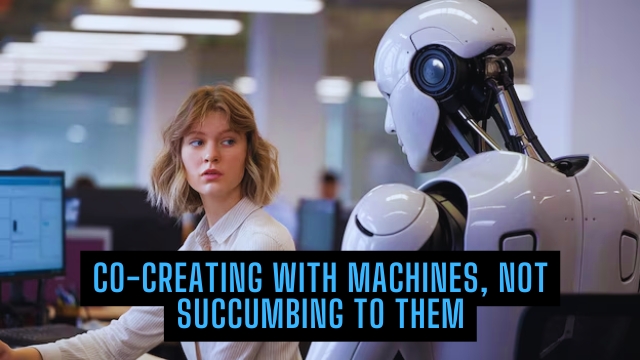
The Human Spark — Intuition, Emotion & Serendipity vs. Predictive Precision
Despite the promise and precision of AI, filmmaking remains rooted in the human experience. Great stories aren’t born from algorithms—they emerge from human emotion, instinctive timing, and those unquantifiable moments of creative risk. AI may generate outlines, cut scenes, or suggest edits, but it cannot replicate the serendipity of a performance improvised on set, or the cultural resonance of a line whispered just right.
In an industry where audience connection is everything, empathy remains a uniquely human gift. AI can forecast plot efficiency, but only people can feel when a story moves the soul.
Ethical Guardrails — Transparency, Consent, Inclusive Representation
For AI to be a force for good in film, ethical considerations must remain paramount. This means:
- Transparent documentation of where and how AI was used in development and post-production.
- Informed, revocable consent from actors, writers, and crews, especially concerning voice, likeness, and biometric data.
- Fair compensation models for any AI use that draws on a creator’s IP, identity, or labor.
- Ensuring diverse representation in AI training datasets to prevent algorithmic bias and cultural homogenization.
Ethics cannot be an afterthought—they must be integrated at every level of the AI-infused creative process.
Preparing the Next Generation — Training, Mindsets, and Hybrid Creativity
The future of Hollywood belongs to hybrid creatives—those who understand both the emotional core of storytelling and the mechanics of machine learning. As AI tools democratize production and amplify creative reach, it’s essential that training programs reflect this new reality:
- Film schools must teach prompt engineering, narrative data analysis, and AI ethics alongside screenwriting and cinematography.
- Unions and guilds should offer upskilling paths to help traditional artists stay competitive and secure.
- Creative teams should embrace interdisciplinary collaboration—pairing technical fluency with narrative depth, and curiosity with craft.
The most enduring films of the AI era will be made not by machines, nor by humans alone, but by teams who know how to co-create, iterate, and innovate together.