
From Binge Boom to Weekly Wins: The Streaming Pivot
A Brief History of Streaming Models: Netflix, Hulu, Disney+, and the Rise of Binge Culture
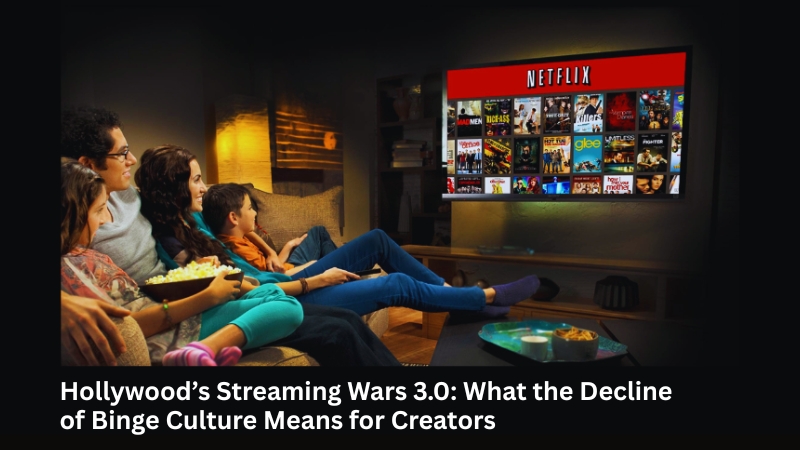
In the early 2010s, Netflix rewrote the television playbook by dumping full season drops—ushering in an era where viewers “binge-watched” entire stories in a single weekend. The platform’s 2013 release of House of Cards exemplified this approach, triggering months of water‑cooler conversations and driving subscriber growth. By 2025, streaming dominated viewership: Nielsen reports that streaming now accounts for 71% more screen time versus broadcast and cable combined.
At the peak of this binge boom, roughly 73% of global viewers habitually streamed multiple episodes in a single sitting. Hulu—which, despite being an early adopter of next‑day TV—followed a hybrid model, but loyal subscribers primarily leaned into binge releases.
Disney+ (launched in late 2019) and other major platforms also rode the binge wave in early days but have increasingly experimented with mixed-release strategies—half-season drops, limited episode batches, or full-season releases for youth‑oriented content (like Dickinson), reserving clichés and big‑production titles for weekly or staggered rollouts.
Why the Weekly Release Model Is Making a Comeback
The binge model offered convenience—but came with strategic downsides built over time:
- Subscriber churn and fatigue: More than 42% of users now subscribe, cancel, and resubscribe across services, creating volatility and razor-thin margins.
- Cultural shelf life: Binge drops generate strong initial buzz, but visibility plummets quickly. Weekly releases keep shows atop charts longer—The White Lotus, 1923, and Reacher dominated streaming rankings weeks into run thanks to episodic pacing.
- Creative breathing room: Weekly pace revives serialized storytelling tension. Writers and showrunners can refine narrative arcs mid-season, responding to online chatter or unexpected feedback—short-circuiting the “final cut” mindset forced by binge schedules.
- Advertiser alignment & engagement metrics: Hybrid models—dropping a few episodes initially then moving weekly—enable platforms to tap engagement KPIs over longer timeframes, which feed ad-supported tier monetization strategies.
- Community revival: Weekly releases reintroduce the “appointment viewing” model—rekindling communal rituals around shows (WandaVision, The Mandalorian) that foster deeper discourse—and prolong media relevance.
As viewer preferences fragment, 19% actively seeking weekly drops; others still binge—platforms are embracing nuanced, show-specific strategies, blending binge, batch, and weekly releases to optimize for retention, cultural resonance, and creative expression.
The Economics Behind the Shift
Subscriber Churn and the Cost of Content Fatigue
Streaming providers increasingly face a churn crisis. A YouGov survey in the UK found that 31% of subscribers canceled at least one service in the past year—and 39% plan to cut one in the next 12 months. . Parks Associates report even higher churn—it estimates 47% churn rate among U.S. streaming users in 2023.
Why the mass exodus? Content fatigue—the perception that there’s simply too much to watch—and pricing pressure drive cancellations. One global survey shows over 60% of consumers report fatigue, and a third canceled a service merely to reallocate attention or finances. With inflation still biting household budgets, cutting away less-engaged platforms often comes first.
For creators, this means developing content strategies that engage viewers over weeks—not all at once—to reduce fatigue-driven cancellations and extend a show’s lifespan on ranking charts.
Ad-Supported Tiers and Viewer Retention Metrics
To combat churn, streamers are rolling out ad-supported tiers. Unlike traditional AVOD, modern streaming ads rely on engagement metrics (watch time, impressions, click-through rates) rather than just ad load counts.
Platforms like Hulu, Roku, and Prime (with ads) leverage higher-level metrics—retention after ad breaks, completion rates, mid-funnel actions—as selling points to advertisers. . These platforms aim to keep mid- and upper-funnel performance strong, since low-funnel conversions (like purchases) still lag versus linear TV channels, per advertisers.
Meanwhile, audience engagement data informs content takedowns and renewals. Shows that retain viewership through ads—but also drive engagement past the first episodes—are more likely to earn budget extensions.
Wall Street’s New KPIs: Engagement Over Completion
Investor sentiment has pivoted from raw subscriber counts to stickiness—average viewing time, active users per month, watch-through rate, and drop-off points. Disruptive churn spikes and variable completion metrics now dominate stock conversations.
Netflix’s own data speaks volumes: 50% of 2023 churned subscribers returned within six months—an rebound rate far above industry norms, reinforcing the platform’s engagement edge. . This underscores a key theme: viewers unsubscribe when novelty fades but come back for content brands—they trust.
For writers and showrunners, this shift means shaping narrative arcs that retain weekly viewership, pushing character moments and plot beats into ongoing conversation territory. Platforms reward shows that consistently draw viewers episode after episode—turning completion into a KPI, but retention into currency.
How Weekly Drops Change Storytelling and Production
The Rebirth of the Cliffhanger and Audience Anticipation
Shifting to weekly releases reintroduces the art of suspense and anticipation. Each episode feels like “appointment viewing,” creating a communal rhythm across social media timelines. According to Samba TV data, weekly shows like The White Lotus, 1923, and Reacher consistently held top rankings throughout their runs, outlasting many binge-released series in viewer buzz and chart presence.
The cliffhanger—a device tracing back to serials like Batman and Dickensian serial novellas—re-emerges as a narrative catalyst, not just a cheap trick. Cliffhangers stoke audience speculation, water-cooler discussions, and steady media coverage throughout a show’s run—boosting engagement and retention rates above those of binge drops.
Pacing and Episodic Arcs vs. Season-as-a-Movie Structuring
Weekly models demand tighter narrative economies. Writers must craft each episode to stand strong on its own—while driving overarching arcs. That’s a shift from binge pacing, where seasons often feel like long films split into 50‑60‑minute chapters.
This change modulates character reveals and moments of tension more gradually. It also guards against binge-bloat—inevitable when an all-at-once drop includes filler episodes or slow-building subplots. The weekly structure tightens arcs, ensuring each episode earns its screen time in real time—with real audience feedback shaping future beats.
Impact on Writers’ Rooms and Showrunner Strategies
As storytelling rhythms shift, so do the inner workings of creators’ rooms.
1. Shorter seasons, smaller rooms
Streaming now often greenlights 6–10 episode seasons. Mini-rooms—typically 3–6 writers—are now common for early drafts, with the showrunner shepherding scripts during production—an approach both leaner and less structurally supportive than the 2000-era 12–20 writer staffs
2. Dynamic mid-season pivots
Showrunners can calibrate stories midstream—ramping up or softening subplot beats based on audience chatter or retention data, turning live feedback into creative tuning. That was effectively utilized in weekly-run shows that adjusted pacing or character focus in near-real time
3. Pressure, but creative space
While mini-rooms raise equity concerns—less pay-weeks and tighter staffing—the weekly cadence creates less post-production pressure. Scripts are locked earlier, but showrunners gain breathing room in production—not forced into the race to deliver 10 scripts before shoot.
4. Strategic partnerships with marketing
Weekly models align with influencer-driven campaigns, where viewer predictions, social media memes, and mid-stream engagement content (analysis videos, discussion pods) become part of the show’s lifecycle and storytelling ecosystem.
Case Studies: Weekly Wins and Binge Burnout
The Mandalorian, The Last of Us, and House of the Dragon (Weekly Successes)
- The Mandalorian set the tone: launching episodes weekly on Disney+ helped it maintain rankings for its full eight-week run. Even its Season 3 finale—though down ~10 percent versus Season 2—remained the #1 streamed show during release weeks.
- The Last of Us similarly dominated buzz and viewership each week, topping Samba TV and Whip Media streaming charts across multiple episodes, not just a premiere bump.
- House of the Dragon sustained viewer interest and social discussion week-over-week, outperforming many binge-released Netflix titles in engagement and conversation metrics. These weekly-release successes demonstrate stronger retention curves, consistently high viewership, and prolonged cultural relevance across a season.
Binge Experiments That Backfired: The Witcher, Shadow and Bone
By contrast, binge-only drops often fizzle fast:
- Shadow and Bone: debuted strong, but viewership dipped steeply thereafter—typical “binge drop” decay—falling off Nielsen charts by Week 3 despite strong opening numbers.
- The Witcher: critics noted sustained engagement suffered compared to weekly-style builds—viewers binged early but lost enthusiasm mid-season.
Audience feedback on Reddit echoed this:
“A lot of Netflix shows … would be way more popular / have way more interest (long‑term) from a weekly drop approach model (e.g. Witcher, Shadow and Bone). It allows for more publicity each week”
These fast-drop models can create short-term spikes—but often leave series without sustained engagement or staying power.
Hybrid Models (Netflix’s Split Seasons, HBO’s Mini-Binges)
- Netflix’s split seasons (e.g., Stranger Things S4, You, The Crown) aim to merge binge’s emotional immersion with weekly retention lift. The platform reports longer chart presence, though combined viewership sometimes trails full-season drops.
- HBO occasionally experiments with “mini-binges”—releasing 2–4 episodes at once, then moving weekly, balancing initial hype with engagement longevity.
Split or hybrid models help platforms stretch consumer interest over more weeks; however, viewership impact varies by title, and some splits have incited fan backlash alongside modest long-term gains.
What It Means for Creators
| Model | Upside | Downside |
|---|---|---|
| Weekly | Sustained buzz, cliffhanger-driven retention | Requires leaner pacing, production agility |
| Full-Season | Viewer immersion, binge-friendliness | Rapid drop-off; risk of churn post-binge |
| Split/Hybrid | Retention plus early buzz; flexible cadence | Viewer frustration, inconsistent metrics |
Weekly-released shows tend to last longer in the cultural conversation and often yield steadier engaged audiences per episode. Binge experiments—while drawing initial attention—risk burnout and faster-perceived fatigue. Hybrid models aim for the best of both, but must be tuned precisely: ill-timed splits can alienate fans despite boosting retention window.
The Creator’s New Reality: Opportunities and Challenges
More Time to Build Word-of-Mouth (but Less Launch Hype)
Weekly release models give creators a crucial advantage in today’s crowded streaming market: sustained buzz. Instead of a single launch moment followed by immediate drop-off, multi-week premieres allow audiences and press to discover, discuss, and share as the season unfolds. Word-of-mouth becomes a strategic tool—nurtured episode after episode—yielding higher trust and engagement.
- Why word-of-mouth matters: In 2025, organic recommendations are still the third most-cited source influencing viewers, behind search and TV ads.
- Trust fuels retention: Consumers trust UGC and peer-influencer input 92% more than brand media—a powerful metric for independent creators who lack big marketing budgets.
- Lifetime engagement: Rather than being buried under algorithm-driven stacks days after release, weekly episodes allow habitation in private channels (WhatsApp, Discord, Reddit), sustaining organic conversation throughout the season.
- Takeaway for creators: Design marketing plans that evolve—with early reveals, mid-season insights, influencer teasers, and countdown tactics. Growth comes not only from the launch moment, but from strategic community-building over weeks.
Evolving Press Cycles, Influencer Marketing, and Streaming Algorithms
The shift from binge drops reconfigures how PR and social-marketing teams strategize:
- Press cycles lengthen: Weekly releases allow staggered outreach, with each episode getting a new hook—actor interviews, behind-the-scenes teases, fan theories—multiplying touchpoints.
- Influencer momentum: Collaborations with micro- and nano-influencers—already generating a 61% engagement uplift across creator marketing—mean creators can cascade buzz across niche communities step by step.
- Algorithmic favor: Engagement longevity—likes, shares, watch-complete rates across weeks—signals to algorithms that a title is sticky. Continued buzz keeps a show visible in discovery feeds longer than a quick binge encore.
- Data feedback loops: With weekly data from platforms, creators can see where drop-offs happen—do episode 3’s targeting misfires? Hammer tonal shifts? This empowers adaptive marketing and even content tweaks in serialized or limited-run formats.
Integrate marketing outreach into the creative production cycle. Align press decks, influencer previews, and paid campaigns with each episode’s emotional beat; don’t treat marketing as tacked-on.
Implications for Independent Creators Pitching to Streamers
Indie creators face both opportunity and challenge in this new paradigm:
- Opportunity: Smaller seasons (6–10 episodes) with tight narrative arcs fit boutique budgets. Weekly pacing allows indie teams to build cult followings, plot-driven dialogue forums, and episodic talk shows (e.g., post-episode fan discussions).
- Pitch differentiation: Platforms like Olyn coast-to-coast offer full revenue share and DIY distribution—with algorithms driven by referral and creator-led sharing—incentivizing smart indie marketing.
- Challenge: Weekly models demand leaner budgets for promotion, requiring indie teams to master UGC, audience segmentation, and influencer micro-deals; pitching must highlight cross-episode stickiness as well as series concept.
- Hybrid strategies: Indies may embrace flexible distribution—some episodes in full, others drip-fed—testing release formats to match niche audiences (e.g., gaming, sci-fi, LGBTQ) and measuring retention signals with every drop.
Indie teams should build audience-driven engagement plans before pitching: identify community clusters, run low-budget teaser releases, and prove stickiness with engagement metrics. Documenting early retention data makes your show far more pitch-ready in “Streaming Wars 3.0.”
Platform Strategies in 2025: How the Giants Are Repositioning
Netflix’s Move Toward Live Events, Ads, and Franchise Building
In 2025, Netflix is blurring the lines between streaming and linear television. Their landmark deal with TF1 in France in summer 2026 offers live sports, reality shows, and linear programming—cementing Netflix’s pivot toward live events and real-time content. . Meanwhile, their ad-supported tier—now with 94 million monthly active users—powers push into both premium ads and high-value retention content like WWE’s Monday Night Raw, producing 4.9 million global views in its January run.
- Daily engagement loop with live sports/events and talk formats (e.g. Pat McAfee Show).
- Ad revenue + retention model combining premium originals with linear-style streaming.
- Franchise deepening via sports, podcasts, and tentpole ecosystems that revitalize existing IP.
Netflix is becoming the “one-stop shop”: live, on-demand, ad-driven, and analytics-informed.
Disney+, HBO Max, and Paramount+ Lean Into Weekly Premieres
Legacy streamers are embracing weekly formats to prolong viewer interest:
- HBO Max (Max Originals) has used weekly episodic releases since 2019 to maintain show momentum. The strategy reinforces longevity (shows like Succession and Chernobyl remain cultural fixtures months after airing).
- Disney+ and its bundled platforms (Hulu, Max) continue to follow a hybrid model: high-impact titles like Mandalorian still roll weekly, while lighter or youth-focused series sometimes drop in batches.
- Paramount+ and NBCU channels now favor staggered content delivery—initial drops followed by weekly installments—to balance early excitement with retention longevity.
This repositioning reflects broader industry recognition: weekly pacing drives sustainable attention, positive audience sentiment, and more predictable release economics.
The Rise of FAST Channels and Nostalgia Programming
Free Ad‑Supported Streaming Television (FAST) channels and nostalgia programming are rapidly reshaping market strategies:
- FAST growth: Over 1,900 linear “channels” now operate globally—Tubi, Pluto TV, Roku Channel, and niche-branded FAST feeds—providing linear-style attraction without subscription friction.
- Monetization via ads: FAST channels allow rights holders to repackage catalog content, monetize via targeted ad buys, and test audience reactions before committing to original, scripted production.
- Nostalgia-first strategies: Platforms are rolling curated retro blocks—’90s sitcoms, early-2000s dramas—as this “comfort programming” drives repeat engagement, influences FAST view time, and rekindles dormant IP value.
Advertisers benefit from granular behavioral data; creators may profit from revived interest in older shows as FAST consumption grows.
Summary
- Netflix diversifies into live events, ad-tier breadth, and franchise synergies for stickier engagement.
- Disney+, Max, Paramount+ lean into weekly structures—balancing binge-style drops with serialized pacing.
- FAST channels and nostalgia-driven feeds capitalize on low-barrier viewing, monetization of back-catalog assets, and new viewer discovery loops.
Streaming Wars 3.0 isn’t just about releasing content—it’s about evolving full-platform strategies across live, premium, ad-driven, curated, and legacy layers. The giants are moving from pure binge tactics to ecosystem orchestration—bridging live, linear, episodic, and nostalgia-driven consumption in 2025 and beyond.
A More Patient Future for Streaming Storytelling?
The streaming wars have entered their third act—not one defined by explosive subscriber growth or rapid binge cycles, but by platform recalibration, narrative pacing, and creative intentionality. What was once a race to deliver entire seasons in a single drop has evolved into a more strategic, layered approach: weekly releases, hybrid rollouts, and ecosystem-driven engagement now dominate the conversation.
This is good news for creators.
Weekly pacing gives storytellers space to build suspense, shape arcs with care, and watch their characters live beyond the dopamine spike of a launch weekend. It invites the audience to lean in—not just watch, but wait, speculate, and return. It mirrors the rhythm of storytelling traditions that predate digital delivery, while taking full advantage of modern distribution, marketing, and data feedback loops.
But it also comes with new responsibilities. Showrunners must now consider mid-season fan engagement, platform KPIs beyond completion rates, and how social signals shape a show’s trajectory. For independent creators, pitching isn’t just about story—it’s about showing strategic awareness of pacing, audience engagement, and cross-platform resonance.
As platforms diversify—from live sports to FAST channels and franchise ecosystems—streaming is no longer a single model. It’s a landscape. One where patience, adaptability, and serialized creativity will be rewarded.
Streaming 3.0 doesn’t signal the death of the binge—but the rebirth of attention. For writers, producers, and content strategists, that opens the door to deeper audience connection, longer cultural relevance, and a more sustainable creative economy.
The future of streaming storytelling isn’t just faster, cheaper, or louder.
It’s smarter—and more patient.