
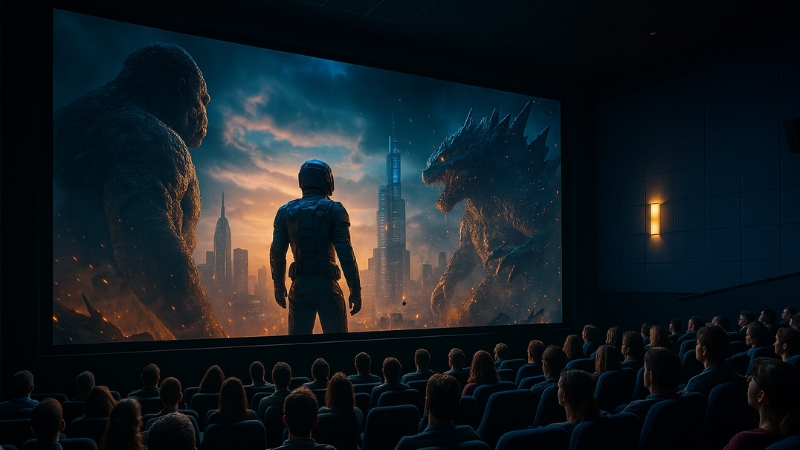
The Theatrical Comeback No One Saw Coming
From Streaming Surge to Box Office Resurgence
In the early 2020s, streaming platforms dominated film consumption, undercutting theatres with convenience, original content, and direct‑to‑home releases. As studios raced to fill libraries on Netflix, Disney+, Amazon Prime Video, and others, theatrical windows shrank, and streaming-first became the norm.
Yet the last two years have reversed the trend. While U.S. box office numbers for 2024 dipped slightly to $8.7 billion—down just 3.3% from 2023’s $9 billion—they easily outperformed pandemic lows and signal a broader stabilization in theatrical attendance. Studios have responded by re‑establishing roughly 90‑day theatrical windows—a 20 percent increase since 2022—prioritizing exclusivity on the big screen before streaming release.
This resurgence isn’t nostalgia—it’s economics. Ticket sales now act as a key barometer of cultural muscle. Home screens might dominate convenience, but movie theatres retain unmatched capacity for communal spectacle, shared immersion, and premium pricing.
Why Event Films Are Driving Audiences Back to Cinemas
Event films—tentpole releases that generate urgency and cultural conversation—are fueling this theatrical renaissance. Following two quiet pandemic years, 2024 saw a surge in “must‑see‑on‑the‑big‑screen” titles. Pixar’s Inside Out 2 shattered animation records with a staggering $1.7 billion global total, becoming the year’s highest-grossing film. Likewise, Moana 2 opened to nearly $221 million across the Thanksgiving weekend, reinforcing family-focused releases as box-office bellwethers.
Beyond animation, tentpoles like Deadpool & Wolverine and Godzilla x Kong: The New Empire each cleared $500 million + worldwide, showing that franchise-driven spectacles still command theatrical dominance. Studios are leaning into this momentum by building pre-launch hype, leveraging premium formats (IMAX, 4DX), and staging limited-time fan experiences that cannot be replicated at home.
In short, event films are phoenixing theatrical strategy. They offer communal moments—mass goosebumps, water-in-the-pool 4DX thrills, and shared first impressions—that streaming can’t replicate. And in doing so, they’re giving cinemas a renewed—and lucrative—lease on life.
What Defines an “Event Film” in 2025?
Spectacle, Scale, and Star Power — But Also IP and Fandom
Event films are more than big budgets and familiar faces—they’re cultural moments that feel too compelling to miss on the big screen. While massive effects, A‑list casts, and tentpole budgets remain core traits, today’s event films also rely on strong intellectual properties and robust fandom ecosystems.
Franchise familiarity offers an instant audience base; a Marvel sequel or long‑running animation can launch with global anticipation. But beyond IP, event status stems from something rarer: we’ve seen films like Inside Out 2 hit over $1.7 billion even without shared universes, proving that emotional resonance and novelty still match spectacle in drawing crowds. . A-list names—directors like Christopher Nolan or stars like Ryan Gosling—also create momentum. Studios package star power with immersive marketing tie-ins, experiential campaigns, and premium-format releases (IMAX, 4DX), elevating the theatrical experience itself.
In 2025, spectacle extends beyond effects—films that tap into nostalgic fandoms (animated sequels, beloved adaptations) or deliver cultural catharsis (historical epics or franchise entries) command attention in ways that streaming one-offs rarely replicate.
From Barbenheimer to Avatar: Cultural Moments That Demand a Big Screen
The “Barbenheimer” phenomenon in July 2023—Barbie teamed with Oppenheimer in what became the fourth-largest opening weekend ever—highlighted how dual‑film cultural moments can supercharge theatrical returns. Each film earned extraordinary buzz: Barbie for pink-pop-feminist flair, Oppenheimer for Nolan’s third-person historical epic, jointly generating over $2 billion globally.
That trend continues as studios attempt calculated counter‑programming. The “Glicked” release pairing—Wicked vs. Gladiator II—sought to replicate the energy, though analysts caution the uniqueness of Barbenheimer’s convergence is rarely repeatable. Nevertheless, coordinated releases of franchise tentpoles or genre-opposite films generate communal urgency, social media virality, and premium ticket sales, reinforcing that audience comes to theaters for shared, celebratory experiences.
Even outside meme pairings, singular films like Avatar: The Way of Water (2022) or Dune: Part 2, craft mass spectacle—deeply immersive worlds and theatrical formats—that shape release calendars and marketing strategies around real-world events, premieres, and communal viewing.
Genre Trends: Sci-Fi, Superhero, Musical, and Global Crossovers
In 2025, certain genres are more likely to reach event status. Sci‑fi epics and superhero action still top the box office charts—Warner Bros.’ Minecraft Movie ($423 million domestic) and Disney’s Captain America: Brave New World ($415 million) rank among the year’s highest-grossing films. These titles benefit from pre-existing brand loyalty, multi-territory storytelling, and visually immersive spectacle.
Musicals and animation are also staging comebacks. Lilo & Stitch posted $388 million, demonstrating that family-friendly brand revivals can drive multi-generational attendance. And outside Hollywood, films like China’s Ne Zha 2 amassed $2.2 billion worldwide, spotlighting how non-English global releases are increasingly treated as event films at multiplexes across continents.
Genre crossovers—such as action-adventure musicals, or animated sci-fi—fuse fan bases and broaden theatrical reach, reinforcing the concept that an “event” film is defined not only by budget and effects, but by its ability to unite audiences under a shared cinematic moment.
Studio Strategy Shifts Post‑Pandemic
Windowing Reimagined: The New Theatrical‑to‑Streaming Pipeline
In the years following the pandemic, theatrical windows shrank dramatically—from roughly 90 days to as short as 30—upending long‑held distribution norms. By 2024, the average gap between a U.S. theatrical premiere and digital availability settled around 30–45 days, with major films often enjoying longer windows of 100–120 days, while smaller releases dipped closer to the 30‑day mark. Theater owners, represented by Cinema United, have argued for reinstating a minimum 45‑day exclusivity, warning that ultra‑short windows risk “undermining medium‑ or smaller‑budget films” by discouraging casual moviegoers.
Today, studios embrace a title‑specific windowing approach: blockbusters retain longer theatrical exclusivity to maximize box office returns and premium‑format sales, while mid‑budget and genre films transition faster to TVOD/PVOD or streaming—balancing theatrical hype with quicker digital monetization. Sony, for instance, averages 106‑day theatrical windows through license partners, while Universal’s hybrid model ranges from 49 to 120 days depending on platform and title tier. This adaptive pipeline aims to preserve theatrical value while leveraging streaming ecosystems for ongoing revenue.
Marketing Budgets and the Importance of In‑Theater Hype
Marketing strategies have recalibrated in lockstep with post‑pandemic release planning. Studios now allocate between 50–100% of production budgets toward promotion—an investment aimed at driving event‑film urgency and theatrical foot traffic. Theatrical-only campaigns leverage trailers, experiential activations, press junkets, and limited‑edition tie‑ins—creating buzz that sustains weekend‑by‑weekend momentum.
High‑profile releases like Barbie and Oppenheimer (the Barbenheimer phenomenon) exemplified how synchronized marketing and shared cinematic schedule excitement can generate $2 billion+ in global box office returns. Meanwhile, digital campaigns remain essential but are tailored to bridge theatrical and streaming windows—sustaining community chatter during the exclusivity period, then driving viewers to owned platforms.
Tentpoles vs. Streamers: Where Mid‑Budget Films Now Live
Post‑pandemic, tentpoles and franchise films are treated as theatrical-first tentpoles—they command long runs, premium screens, and exclusive promos. In contrast, mid‑budget films often adopt hybrid release models: a few weeks in theaters to build cachet and press, followed by transactional video‑on‑demand or quick streaming launch. This strategy mitigates risk while preserving upside.
Rian Johnson’s intentionally theatrical push for Knives Out 3—amid Netflix’s streaming-centric strategy—underscores this shift. Despite Netflix’s co‑CEO labeling theatrical real estate “an outdated concept,” filmmakers and exhibitors alike affirm that communal premieres remain irreplaceable for crafting cultural moments, especially for titles with franchise pedigree or audience loyalty.
Studios without proprietary streaming platforms—Sony being a prime example—maintain longer theatrical windows via licensing deals, pointing to a more conservative approach where theatrical revenue remains integral to lifecycle planning.
Together, these shifts reflect a deliberate re‑anchoring of theatrical strategy—embracing variable windows, high‑impact marketing, and tailored release paths based on budget and narrative weight. The result? A renewed balance between big‑screen spectacle and digital convenience—one in which theatrical still signals prestige, event-ness, and creative stakes.
The Box Office as a Cultural Thermometer
Why Theatrical Still Signals Prestige and Popularity
Despite streaming’s meteoric rise, theatrical grosses remain the gold standard for cultural impact. Films that command big-screen attention often outperform straight-to-stream releases across multiple metrics. Analysis from Entertainment Strategy Guy shows theatrically premiered films outperform purely streaming releases by a wide margin in terms of long-term viewer engagement and brand impact. Moreover, feature films that earn big in cinemas tend to carry higher social buzz, stronger media coverage, and enduring IP value—qualities that streaming-only titles rarely achieve. Studios still treat box office success as a signal not just of revenue, but of audience appetite, franchise health, and the creative heft behind a property.
Audience Behavior: Weekends, Premium Formats, and Group Viewership
The weekend remains cinema’s crown jewel: according to NATO and industry analyses, peak attendance still clusters Friday through Sunday. Premium formats like IMAX, 4DX, Dolby Cinema—immersive, multisensory experiences not replicable at home—draw audiences willing to pay upwards of 20–40 percent more per ticket. Group dynamics also play a role; event films still thrive on communal anticipation. Families flock to animated sequels on weekend afternoons, while fan screenings and midnight premieres feed cultural momentum. Even within streaming’s domain, theatrical attendance signals stronger emotional investment: once in theaters, audiences remain more likely to recommend, re-view, or attend fill-up events like fan screenings or Q&As.
Ticket Sales vs. Subscriber Metrics: A Studio Perspective
For streaming platforms, “watch time” and completion rates have become key KPIs—but they don’t align neatly with theatrical performance. Netflix’s own data show that films driven by box office engagement often perform significantly better in their streaming windows than straight-to-stream titles. Studios compare box office results with subscription retention curves: a theatrical hit can drive sign‑on bursts, social engagement, and merchandising opportunities—factors that streaming-only releases struggle to match.
This dual-metric lens—tracking both ticket sales and attention minutes—gives studios a fuller view of a property’s lifecycle. As Number Analytics notes, the broader franchise and lifelong value (e.g., theme parks, gaming, merchandise) often hinge on theatrical prestige. In short, while streaming is vital to distribution ecosystems, box office remains the foundational bellwether for visibility, fan engagement, and long-term IP strategy.
Together, these insights underscore theatrical performance’s role as both economic engine and creative signal. It’s not just revenue—it’s cultural cachet, community catalyst, and strategic lever for studios balancing big-screen spectacle with the subscription-based future.
Case Studies of Event Film Success
Barbie & Oppenheimer: Viral Marketing Meets Mass Appeal
July 21, 2023 saw the phenomenon dubbed “Barbenheimer”—the simultaneous release of Greta Gerwig’s Barbie and Christopher Nolan’s Oppenheimer. Individually, these films achieved staggering box-office returns: Barbie grossed $1.447 billion worldwide, becoming the highest-grossing live-action comedy of all time, while Oppenheimer reached nearly $976 million, ranking as the highest-grossing biographical and R-rated film on release. Together, they amassed $2 billion globally in a single weekend, buoyed by cross-meme marketing, star-powered premieres, and dual-features that literally felt like a shared cultural event.
This phenomenon demonstrated how viral social media campaigns, paired with complementary tonal duality, can double theatrical momentum—cultivating urgency, media coverage, and community viewing experiences. Barbie’s immersive pink visuals and Oppenheimer’s dramatic historical weight complimented each other, drawing audiences across demographics and reinforcing that event films can live beyond genre lines to become shared pop-culture touchstones.
Dune, Top Gun: Maverick, and the Power of Cinematic Worldbuilding
Large-scale worldbuilding remains central to theatrical successes. Top Gun: Maverick (2022) grossed $1.496 billion worldwide—nearly eight times its $177 million production budget—becoming the highest‑grossing domestic film of the year. Its sustained legs (a domestic box-office retention ratio of 5.7× weekend one) showcased the strength of nostalgia, spectacle, and strong word-of-mouth buzz.
Similarly, Dune: Part Two (2024) surpassed $714 million globally, with IMAX screenings alone accounting for $145 million—highlighting how scale, immersive formats, and cinematic craftsmanship amplify box-office performance and prestige. These films prove that visually ambitious storytelling—rooted in world-class production design and panoramic spectacle—continues to reward theatrical release strategies and premium viewer spend.
Global Films Gaining Ground: Bollywood, K‑Drama, and Nollywood in Multiplexes
Theatrical event film culture is becoming truly global. China’s Ne Zha 2 stands out with $2.2 billion in worldwide box office—a record for an animated Chinese release, and a signal that non‑Hollywood franchises can stand toe-to-toe in global multiplex competition . Bollywood and Nollywood releases—once limited to regional cinemas—now project international aspirations by tapping diaspora audiences and collaborating on premium overseas rollouts.
South Korea’s growing export market (K-drama and K-film) has seen theatrical local premieres that rival Hollywood in terms of immersive fan experiences, red-carpet hype, and social media scalping culture—reinforcing the idea that event films must tap not just spectacle, but communal narrative resonance across borders.
Conclusion of Case Studies
Whether through cross‑genre viral pairings like Barbenheimer, iconic brand reinventions (Top Gun: Maverick, Dune), or expanding international tentpole releases, today’s theater-defining films succeed by creating spectacle, cultural conversation, and shared experience. They reaffirm that an “event film” in 2025 isn’t just measured by budget or franchise legacy—but by its ability to forge collective moments and feed theatrical momentum in an increasingly digital entertainment ecosystem.
How Theatrical Releases Affect Creators
Budget Considerations: From Streaming Safe Bets to Tentpole Risks
When creators weigh projects, budget remains a core differentiator between theatrical and streaming releases. Mid‑budget films—defined between $20 million and $100 million—once thrived in theaters; today, many opt for quick-turn streaming deals or limited theatrical runs to reduce risk and retain margins. From a financing perspective, theatrical-first projects demand heavy upfront investment—not only in production but in marketing and distribution—while offering the potential for box office upside, premium formats, and global reach. By contrast, streaming-first films often secure higher upfront guarantees from platforms, but sacrifice potential upside and residual schemes tied to box office earnings.
Creators eyeing theatrical runs must budget for prints & advertising (P&A), festival launches, and physical distribution deals, all while planning for potential gaps between theatrical and secondary streaming revenue streams. Meanwhile, smaller films may find it more pragmatic to align with streamer budgets and audience guarantees, albeit at the cost of lost theatrical marquee.
Storytelling Scope: Writing for the Big Screen
Writing for theatrical demands a different tonal and structural language. Event films often prioritize expansive visual scope, emotionally charged set pieces, and inject stakes designed to fill a stadium-like screen. Theatrical scripts tend to lean into spectacle—epic cinematography, immersive sound design, and pacing built around three-act arcs that reward collective viewing. In contrast, streaming-first scripts may emphasize intimacy, character-driven nuance, and digestible narrative arcs suited to at-home viewing.
Creators juggling both models are rethinking how stories breathe; some adapt mid-budget scripts for initial theatrical windows, bridging audience anticipation via high-impact visuals, then continue serialized storytelling once films hit streaming windows. In essence, writing “cinema first” entails retooling narrative beats for collective communion, event cadence, and box-office-minded scope—an entirely distinct lens from the binge-watching ethos.
Performance Metrics and Residuals in a Theater-First Economy
In a theatrical-first model, creators tap into a multi-tiered compensation landscape. Residual payments for actors, writers, and directors on theatrical films are typically calculated as a percentage of gross receipts—from box office to downstream home entertainment and streaming license fees. Union agreements enforce residuals post‑exhibition, providing potential long-term income streams for talent. By contrast, streaming projects often offer higher upfront pay but limited residual upside. Unions like SAG‑AFTRA and the WGA are actively negotiating to align streaming residuals with box office parity, but many creators cite diminished long-tail income from direct-to-stream deals.
Data show that theatrical films outperform straight-to-streaming titles in downstream viewership: films released theatrically often enjoy stronger retention and engagement once they reach streaming platforms. This translates into larger residual pools and stronger ancillary revenue for theatrical-first creators—enhancing not just immediate paychecks but lifetime earnings through syndication and licensing. For emerging talent, selecting theatrical models can lay groundwork for long-term career momentum, residual security, and prestige branding—benefits that often eclipse the safer but flatter streaming payouts.
The Future of Hybrid Release Models
Premium VOD, Limited Windows, and Audience Segmentation
Hybrid release models are redefining how films reach audiences in 2025. While studios are still experimenting, there’s a clear shift toward a more flexible release strategy: films may now debut in theaters for a brief period before moving to premium video-on-demand (PVOD) or being released simultaneously across platforms. Industry analysis highlights how day‑and‑date releases, premium VOD tiers, and compressed or variable theatrical windows are becoming increasingly common—delivering content across formats at once and tailoring the experience to different audience segments. Rather than treat theater and streaming as mutually exclusive, this new model blends the two: a film may command exclusive cinema time, then transition directly into high-priced rentals or on-demand access. The goal is to retain theatrical prestige, while immediately tapping into the at-home revenue stream and catering to customers who expect rapid digital availability.
How Indie Distributors Are Leveraging Theatrical as a Launchpad
Independent distributors are increasingly treating limited theatrical runs as strategic platforms for wider release and long-term revenue. Many indie films now start in major metropolitan theaters—sometimes under 600 screens—qualifying for awards or critical buzz before expanding distribution organically.
. This model positions independent titles as “event cinema,” offering audience exclusivity and prestige, and generating press coverage that elevates their profile ahead of streaming or TVOD distribution. Distributors such as Neon and A24 creatively deploy guerrilla campaigns, festival debuts, and targeted cinema bookings to build momentum. Neon’s breakout hit “Longlegs,” for example, generated over $70 million domestically on a limited release, propelled by digital-first marketing and carefully staged rollouts that leveraged both theatrical scarcity and streaming anticipation.
Indie strategies now treat theaters as launchpads—tools for publicity, audience building, and brand positioning—rather than just revenue centers.
Will AI and Data Analytics Predict Future Box Office Hits?
AI and data analytics are progressively bridging art and commerce by forecasting theatrical performance with increasing accuracy. Tools like Prescene and Cinelytic analyze elements ranging from script specifics and casting choices to release timing and historical genre trends—yielding data-backed projections that can improve box-office planning by up to 20 percent.
Studios increasingly embed predictive analytics in greenlight decisions, marketing prioritization, and release windows. Machine-learning models trained on box-office outcomes, sentiment analysis, and cast variables now surface viewer-retention trends, flag potential telecom rollouts, and assist in budget estimations. This isn’t replacing creative intuition, but enhancing strategic planning: by simulating outcomes, teams invest wisely and pivot early in response to real-time forecasts. As AI forecasting becomes more sophisticated, future theatrical strategies may involve dynamic release adjustments—altering windows or promotional budgets mid-campaign based on live performance data and predictive signals.
Why The Big Screen Still Matters
Despite the rapid evolution of distribution models, the return of theatrical releases has reaffirmed something simple and powerful: there is still no substitute for the big screen. The communal energy of packed midnight screenings, the awe of IMAX sound design rumbling through a room, and the ritual of watching a film unfold in real time—these experiences continue to hold deep cultural significance.
Event films have become more than just high-budget spectacles; they are connective tissue across demographics, generations, and global markets. From Barbie and Oppenheimer to Dune and Inside Out 2, audiences have shown a clear willingness to leave their homes for stories that offer spectacle, scope, and resonance. These are not just movies—they are moments. They generate conversation, online virality, and sometimes even fashion trends or social rituals. Theaters, once questioned in the age of binge-streaming, are now proving themselves to be both commercially viable and creatively essential.
For creators, the theatrical release isn’t just a premiere date—it’s a statement of intent. It signals ambition, scale, and a desire to craft something worthy of being shared in the most immersive way possible. For studios, the box office remains a thermometer, not just of a film’s financial health, but of its cultural relevance. And for audiences, the theater remains a place to reconnect—not only with stories but with each other.
As hybrid models, predictive analytics, and streaming libraries continue to evolve, theatrical releases will remain the creative and commercial summit. Not every story needs a giant screen. But the stories that do—those that stir, inspire, and unite—are increasingly recognized for what they are: events worthy of our full attention, experienced in the dark, together.