
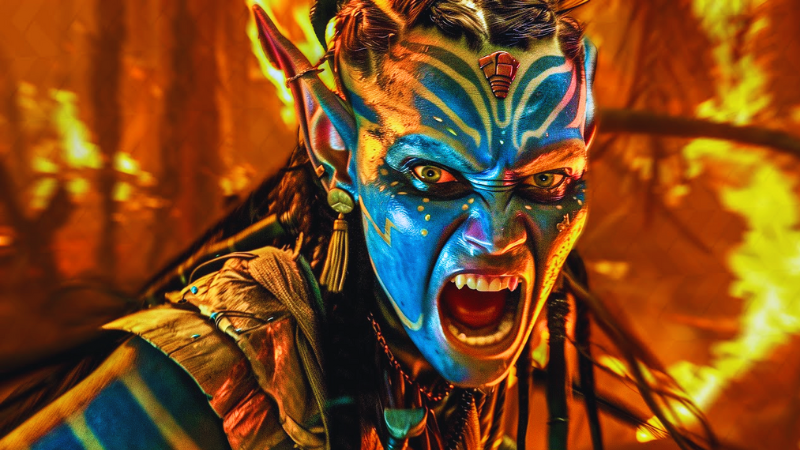
With EVERY new trailer, James Cameron’s Avatar franchise has reshaped audience expectations—first with lush jungles, then with sweeping oceanic wonder, and now with landscapes of fire and ash. The recently unveiled trailer for Avatar 3 tantalizes viewers with visuals and narrative signals that promise not just another return to Pandora, but a dramatic metamorphosis of the world and its inhabitants.
This preview unpacks every hint from the trailer. We’ll explore what’s new in Pandora’s fiery realm, how the Na’vi culture is evolving, which familiar faces return, and why this third chapter feels pivotal not only for cinema but for the conversation about environment, identity, and intertribal politics.
A Blistering First Glimpse of Fire and Ash
The trailer begins with a darkened screen that bursts to life in molten hues—crimson cracks, shifting embers, and bubbling lava revealing a completely new biome on Pandora: volcanic terrain. Gone are the towering Hometree forests and peaceful coral reefs; instead, audiences now encounter molten rock flows, always-lingering ash clouds, and the intense heat that now marks this land.
James Cameron has long said each sequel would explore a different region and cultural expression of Pandora. This volcanic biome serves as the birthplace of a new Na’vi clan whose identity is shaped not by waterfalls or trees but by magma and flame. The landscape captivates immediately. Camera sweeps over rivers of lava; a Na’vi figure stands in silhouette before a fountain of molten rock, hair and clothes moving in the heat.
It feels mythic, primordial—like Pandora’s afterbirth. Cameron isn’t just revisiting a familiar world; he’s inviting audiences to watch it evolve, danger included.
Meet the Ember-Wielding Clan
Nudging into view are the clan members who call this fiery realm home. Their skin is dusted in ash, and their breath glows faintly in the darkness—like sparks in embers. Tattoos appear scorched rather than painted, as though skin and lava are one. The trailer reveals not passive observers but skilled warriors with elemental control.
One standout sequence shows a Na’vi javelin user bringing down a massive pyro-mountain beast. The creature is native to volcanic Pandora—its skin appears hardened, charcoal-like, with molten cracks glowing underneath, echoing the fire-scarred appearance of these new clan warriors.
We see another close-up of a Na’vi woman placing her stinging fingertips against heated rock. In that moment, her eyes resonate with recollection—she is part of the world’s pulse. They don’t just survive fire; they draw strength and identity from it.
This portrayal reminds us Cameron is casting the clans themselves as biomes incarnate. Previous Na’vi tribes reflected forest, sea, and sky. Now, we see flame, resilience, and myth.
Old Faces, New Purposes
Jake Sully (Sam Worthington) and Neytiri (Zoe Saldaña) again lead the Sully family. Trailer glimpses show them trekking dusty, blackened paths as ash rains around them. Jake’s expression is tense—this is not a gentle diplomatic mission but an urgent foray into uncharted territory. Neytiri stands tall, alert to the clan’s customs, schooling her children in an unfamiliar environment.
Their children, teens now, stand at the intersection of cultures—not only Water and Forest Na’vi but survivor of fireborn traditions. The trailer shows their inquisitive steps across hot terrain, learning clan rituals by lava pools, their chants echoing ancestral connection to fire itself.
This three-generation representation signals Cameron’s ambition: Pandora’s future depends on hybrid identities, not only biological Na’vi but blended, multi-clan families who can heal a fractured world.
Conflicts Sparked
Mention of the word “war” surfaces once or twice in whispered voiceovers. The fiery clan’s code is clear: newcomers must prove themselves, not merely pass through. Jake’s diplomatic instincts are tested by harsh traditions. Neytiri, once a fierce warrior but now mother and emissary, must bridge kindness with survival instincts.
Fences ignite fires. Truce demands sacrifices. And deeper still, a sense of ancient pact is hinted at—a promise involving Eywa, Pandora’s guiding spirit. References to “fire cannot cleanse without cost” suggest consequences for trespassing into this sacred realm.
The trailer doesn’t show the antagonist directly, but deeper cuts suggest tension not only against humans again but also internal Na’vi politics, lava-beast conflicts, and deeper social division between clans.
Elemental Symbolism Gains Focus
Cameron has always used Pandora’s elements symbolically. Bioluminescent plants represented hope; watery depths represented memory and emotion. Now fire is being associated with rebirth—and danger. A line of dialog, possibly from Doctor Grace (Sigourney Weaver’s avatar), states that fire is life and death in the same breath.
In cultural rituals, we glimpse Na’vi toasting their javelins in flame, stamping ash onto their cheeks—expressions of clan and transformation. Weapons appear crafted of cooled lava and black basalt, stronger than metal, locally forged. Fire isn’t just power; it’s heritage woven into words and practice.
Given Cameron’s attention to elemental expression—Forest, Ocean, now Flame—this tribe adds a thematic bookend. Future Na’vi may draw strength not from nature alone but from the sacrifice required to walk through fire.
Technology vs. Lava Land
Unlike previous films, where human tech showed up in subtly camouflaged form, this trailer drops human units—small but ominous—in the volcanic zone. One shot shows soldiers in insulated tech armor stepping out onto black rock fields with distant teams above in dropships.
The presence feels invasive, a stark contrast to lush anthropomorphism we saw with Avatar. These suits are clinical, heavy, and clearly ill-suited for the environment—a visual reflection of human arrogance thrust onto an element of sheer unpredictability.
This human Na’vi friction is ancient: the Forest village had to protect its soul from invading tree-cutters. In the Ocean, humans wounded ecosystems by attempts at rescue—killing whales, destroying reefs. Now they invade with fire suppression tech in hand, and for the first time, risk being melted.
Music and Cinematic Tone
Composer Simon Franglen, stepping in for the late James Horner, has tailored an original score for Avatar 3, deeply tied to flame’s rhythm. The trailer opens with smoldered percussion, slow-tempo drums punctuating lava flows, building a hypnotic tension. A female tribal chant pierces through, evoking ceremony and invocation.
The cut frames are deliberate—panning close on scorched hands, children dancing at lava pits, elders leading dance circles around fire. Cinematographer Russell Carpenter balances glowing visuals with deep blacks, crafting dramatic chiaroscuro vistas.
When Jake and Neytiri speak—perhaps to clan leaders or their own children—they do so softly, words careful and measured in rugged silence. This trailer isn’t action-heavy; it lingers in mood and ritual.
Environmental Warnings in Firelight
Beneath the spectacle, environmental themes remain. Cameron has repeatedly stressed that Pandora parallels Earth. In the first film, deforestation and mining were optional brutality. In the second, SEA warming and exploitative regimes were metaphors for the real world.
Now with fire, he turns our gaze toward global issues: wildfires, planetary warming, overindulgence in resource extraction. At a panel, Cameron admitted the volcanic biome also functions as Pandora’s sustainability test. Can a world scarred by fire still hold life? Is destruction part of renewal?
We witness indigenous Na’vi using controlled burn rituals to prevent wildfires—practices mirroring real-world fire ecology like Indigenous Australian land management or controlled forest burns in California.
Once again, myths come alive on screen: Pandora’s clans are not just surviving—they are handling consequences of multiple climates and human interference. Firebeast creatures adapt to sudden smoulders; lava-born worms form symbiotic relationships. Even extinct mountain species adapt—they emerge blackened and hardy.
Comedy, Conflict, and Cameron’s Signature Showmanship
For all the elemental gravitas, the trailer flashes familiar moments of levity. Jake flinches as a lava rock flicks his leg. Neytiri’s stern glare when Jake fumbles tribal protocols. A child splashing scalding water near a lava pit—with panicked adults pulling them away. These micro-moments hint at Cameron’s love of family dynamics and small smiles in the face of catastrophe.
Compared to the original film’s witty bird-dove interventions or the second chapter’s oceanic eel adventures, Avatar 3 promises once more those soft narrative moments amid vastness. Cameron knows that amidst spectacle, audiences connect to small, human gestures—applied here across species.
What the Trailer Doesn’t Show – Yet
Interestingly, there is no direct sign yet of the Sea Na’vi, Viperwolves, or other forest or ocean clans. The trailer seems immersive but isolating, focusing entirely on Flame Na’vi. That suggests either the entire family relocates or that this film will deeply explore conflict in exile or across borders.
Not shown yet: RDA mining forces in deeper numbers, dragons (which we saw in B-roll), or alien species with fire affinity. Whether Air or Shadow Na’vi show up remains to be seen. It may well be that this entry is a single realm deep-dive, with subsequent films expanding outward again.
The World Café Theories Take Shape
In online fan discussions, several theories have sparked:
One claims the Flame Na’vi will reveal ancient links to the Sky or Mountain clans—making them guardians of Pandora’s vertical energy. Another postulates they will be the natural descendants of Eye of Eywa priests seen in holographic nods in previous films.
Some believe Jake’s children—Kiri, Spider, Neteyam—may have inherited or sparked a bond with the flame element, making them vital diplomatic bridges. That would weave a family arc into worldbuilding.
Others point to RDA badges emerging in ash—a sign that humans may use flame-settlement tech to weaponize volcano regions, forcing Na’vi to fight for survival.
The Bigger Picture: A Saga of Reclamation
Cameron’s ambition is clear: Avatar 3 is not simply a repeat of the first two movies. It is a reclamation. From forest to sea, and now to fire, Pandora shifts, and so do the characters at its heart.
The Sully family—led by Jake, Neytiri, and their children—continues evolving. They no longer belong only to one tribe; they are cultural diplomats forced into crisis to nurture unity.
On a wider canvas, Cameron appears to be approaching Avatar as environmental epic and mythological space opera. The original provided Pandora’s Map; the second expanded its depths; this third film explores its heart through heat.
Why This Trailer Matters in Hollywood
In an era saturated by franchises and CGI tentpoles, a trailer that pauses to record fire rituals instead of explosions speaks volumes. Avatar 3 already overtook box office records for previews. The emotional resonance, elemental forces, and story integration challenge the “sequel fatigue” narrative often leveled at tentpole franchises.
Cameron is not just minting brand equity—he’s advancing new cinematic language. Visual fluency, world context, environmental cycles, and family tales—all interwoven in elemental suite. That promises more than popcorn flick: a third act of myth.
What the Trailer Leaves Us Craving
In literary tradition, fire often symbolizes purification, renewal, even apocalypse. Depending on the story’s shape, Avatar 3 may be about sacred fire rituals or about flames of war. Are Sully children learning flame rites? Will Jake act as emissary to Earth-born threats? Will Neytiri be forced to choose between clan and conscience?
What will fills the gap when the trailer’s embers died down? Fans currently speculate the film will open in the volcanic heart of Pandora, introduce a destructive biome, then pivot toward RDA-born disaster tech and eventual alliance across clans.
By the time credits roll, we might expect a turning point: Pandora is hurting, tribal relationships are fraying, and Sully drones may have to ponder if they’re returning home—or into ashes.
Fire Will Cleanse, But Also Burn
Avatar 3’s fiery trailer speaks in elemental tongues: danger, ritual, resistance, peace. It mocks complacency with ash, cracks maps with columns of smoke. It promotes unity via clan rituals and scorched symbolism.
In practical terms, the Sully family, acquitted of forest and sea roles, now shoulder a mantle never before portrayed in action cinema—a primer on familial leadership in elemental crises where culture and ecology collide.
If Avatar as a saga is mythical, Avatar 3 appears to be the crucible—the story’s alchemical chapter that tests both landscape and bloodline.
May the fires of Pandora purify us further—and may our empathy survive the molten crucible.
Here’s looking forward to the premiere—and hours of second-screen crackling.