From the shadows of anticipation, Bong Joon‑ho’s Mickey 17 teaser trailer arrived with cinematic knockdown power. After his historic Oscar sweep with Parasite and masterful genre work in Snowpiercer and Okja, the legendary South Korean filmmaker has once again shifted his lens onto societal fault lines. This time, the focus is a high‑concept science-fiction thriller adapted from Edward Ashton’s acclaimed novel Mickey7. With Robert Pattinson in the lead and a haunting existential premise, the first glimpses are stirring curiosity—and unease. What can we discern about the film’s themes, characters, and visual direction? Let us unpack every frame and whisper.
A Teaser That Opens Pandora’s Box
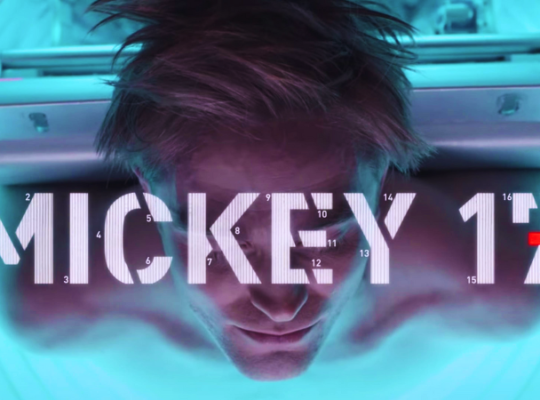
Even before Bong’s name flashed on screen, the teaser planted a haunting question: What if death only meant reset? Audiences see a pod-like chamber, hatch doors sliding open to reveal a newly minted Mickey. Pattinson sits up, blinking into harsh artificial light. His face registers confusion, fleeting horror, then awareness. A voice-over, monotone and distant, intones, “Welcome back, Mickey 17.” The implication shatters expectations.
This sequence communicates two truths: Mickey’s death isn’t permanent, and he’s a system-designed everyman for hazardous missions. The repetition of his awakenings evokes Kafkaan horror—the horror of erasure woven into resurrection.
Where It All Began: The Novel’s Essence
Understanding Mickey7 helps decode what the teaser hides behind its chilling imagery. In Ashton’s novel, the term “Expendable” is a job title and death sentence rolled into one. Mickey Barnes signs up for missions no one else wants, knowing he’ll die, only to be remade and recommitted—each iteration carrying the memories of the last. It’s labor as limb loss, death as draft. Identity becomes compressed: How many copies until you disappoint the original mission?
Bong’s interest in class and structural inequities, as seen in films like Snowpiercer, suggests a damning portrayal of corporate imperialism. Disney-like corporations now exploit human clones as disposable resources. In that context, Mickey’s resignation isn’t heroism—it’s survival in a rigged game.
Casting Robert Pattinson as Cloned Trauma
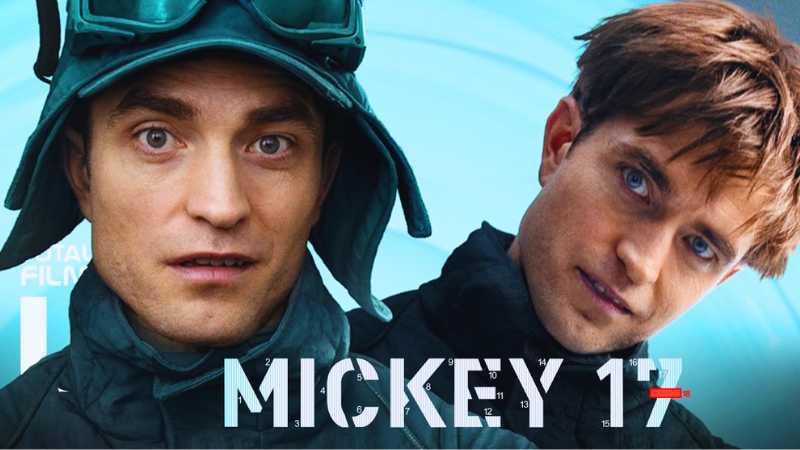
Pattinson brings delicate sensitivity and an air of internal conflict to the role. His past performances in Good Time, The Lighthouse, and Tenet reveal an actor comfortable traversing paranoia and obsessive introspection. In the teaser, he isn’t cocky or cool—he’s vulnerable, uncertain, afraid. This is not the billionaire vampire who sparkled—it’s a man constructed to die, again and again, who knows too much.
The casting speaks volumes. Pattinson doesn’t hide behind superpowers; his tools are nuance and subtle implosion. That creates empathy with the viewer. When he whispers, “Who am I this time?” the question becomes philosophical, personal, essential.
Bong’s Genie in the Teaser Bottle
The teaser establishes Bong’s creative compass instantly. The chamber’s brutal lighting and sterile industrial sheen recall his work in Snowpiercer, where humanity trapped in a train car becomes a microcosm of class zones. Here, the chamber is both womb and morgue, scientific marvel and memorial.
Cinematographer Darius Khondji’s framing emphasizes minimalism. Lingering, off‑center shots suggest disorientation. The pod is both uniform and unsettlingly intimate. Bong’s signature juxtaposition—human warmth versus institutional cold—resonates powerfully.
Echoes of Other Clone Narratives
Mickey 17 enters a crowded conversation. Films like Moon, The Prestige, Bloodshot, Never Let Me Go, and The 6th Day have examined clones, memory loops, and ethical entanglements. Bong, however, has consistently leavened genre tropes with moral reckoning. In Okja, culinary ambition becomes ecological activism. In Parasite, genre horror emerges through domestic inequality. In Mickey 17, near-immortality births fresh questions—what happens when your rewind becomes too long, too repetitive?
The Trajectory of Mickey’s Madness
It’s impossible to fully know Mickey’s journey from the teaser alone, but clues abound. The “17” in his name suggests sixteen previous copies with multiform memories and fleshed trauma. He may not just be reusing himself—he may be providing cover for an AI or corporate executive collecting disposable humans. The government or conglomerate grouping might be unnamed characters in the teaser, but their presence looms.
In the novel, Mickey begins to resist death’s reprogramming. The teaser’s lingering shot of him cradling his head, blinking away awakening shock, suggests a fragility. This film may question whether moral refusal is possible in a system designed to replace humanity with blanks.
Visual Vocabulary: Seeded with Purpose
The teaser invests in its imagery. The chamber walls, shot from different angles, reveal vapor trails, circuit-like conduits, a single task light above Mickey’s head—a cinematic spotlight on the soul’s fragility. No other humans are in sight; only echoed footsteps as Mickey emerges into a corridor.
The color palette is mostly blue‑gray and metallic in the pod, growing warmer the more he moves away. In ‘Snowpiercer’, living spaces were yellow-shaded, reserved for bourgeois privilege—power and comfort could be felt through color. In Mickey 17, warmth may equal autonomy or danger. Bong trusts color and space to tell the story.
Clues Hidden in Audio Design
Though the teaser is brief, its auditory design is haunted. The chamber hums with electronics and distant airflow. Soft beeps contrast Mickey’s evident breathing. Somewhere off-camera, a female voice quietly says, “Iteration complete.” That envelops the moment in oppression and scheduled rebirth.
It’s a contrast to Parasite, where diegetic sounds like dripping water or rustling money envelopes carried subtextual weight. Here, mechanical life-stealing is muffled by machinery, dreamlike and faint—yet powerful in implication.
The Ethical Horror of Expendability
Humans repurposed as test objects is horror in the flicker; it is corporate horror at scale. Unlike cloned clones in Moon, where ethical realism frustrates institutional protocols, here it’s weaponized. Mickey may die dozens of times, but does the company face any cost? Will viewers accept a corporate catchphrase like “Profit over permanence” subtly offered during a mid-credit sting?
In an era where workers feel disposable, the image of a hollow pod with Mickey again pumping his lungs becomes a grim allegory for assembly-line reincarnation, of flesh burdened for profit. Bong’s craft invites empathy for exploited bodies.
Speculative Threads: Allies, Enemies, and Inner Threats
It’s a safe bet Mickey is not alone. Dialogue or B-roll might show other pods, rows of similar chambers suggest repetitive death. Are they like him, clones used for mining, repairing space station hulls, battling pathogens? Does someone argue for humane extinction, and is there a rebel in hiding?
In the novel, the protagonist befriends a scientist, but hostility builds when Mickey resists deletion. Will Bong include a figure reminiscent of Grace or a Captain guiding him? The teaser’s framing suggests the world beyond the pod is cold. Maybe isolation is essential to control Mickey’s psyche.
Tone and Audience Positioning
From the teaser, it’s clear the film is not a mass-market blockbuster. The pacing is quiet, contemplative, even cold. Distribution plans suggest award-season consideration. Mickey 17 could walk a parallel path to Arrival, Ex Machina, or Annihilation, where philosophical intent meets studio resources.
Expect the film to target both cinephiles and genre-thriller fans. Bong’s prestige follows Tony Stark prestige, but Mickey 17 might prompt after-screening debate. That kind of film draws smaller crowds—with long tails and cultural sticky resonance. Bong doesn’t just entertain; he unsettles.
The Science Fiction Centerpiece
The trailer hints the science is advanced yet plausible. Instead of nuclear-fueling his clone pods, he emerges from a bioreactor suspended in liquid nutrient. The pods may be sealed to preserve bone, muscle—just enough to awaken again without starting from zygote. That raises immediate ethical dilemmas: Are these bodies patches over lines of cells, or reservoirs of souls?
The teaser also hints at emergency protocols—Mickey strapped to harnesses, sometimes knocked out after retrieval. It’s reminiscent of controlled settings in biomedical labs or military conditioning rooms. Bong hasn’t placed magic under glass; what he sells is institutionalized biotech.
Audience Effect: A Mirror of Our Disposable Time
When Disneyland opens paths through dark rides, a thrill sometimes blindsides the rider. But Mickey 17 seems to be a haunted corridor. The teaser’s invitation is not to cheer but to sit with existential dread. Clocks don’t tick—they reboot. The film may speak directly to millennials and Gen Z viewers through that sense of impermanence at work—both in career strings and digital trace detachment.
Bong could also critique biometric tracking, debt spirals, and automated replacement labor. Those systems feel familiar, even before Mickey zips into a mission pod. The message may be that even our values are replicated without consent.
Clues to Environmental Design
While we glimpse only the pod, there’s a glimpse of sterile sky light. It may be part of a terraforming station, or a city-space habitat. That opens speculation about colonization: Are these clones the initial workforce for planetary conversion, space mining, pathogen cleansing? The implications escalate to whether Mickey becomes a martyr who seeks to prevent the same company from seeding life on another world with human reuses. The teaser’s background oppressive hum invites spin.
Release Outlook and Production Insights
Warner Bros. and HBO partnered to produce Mickey 17 with Bong, giving him broad creative freedom. The teaser confirms Robert Pattinson, Steven Yeun, Toni Collette, Naomi Ackie, and Mark Ruffalo are aboard. Locations include UK soundstages and On-set builds in South Korea, suggesting practical set design.
Post-production leads include Snowpiercer’s visual effects crew, indicating hybrid sets with large LED volumes. Bong’s avoidance of excessive CGI means immersive worlds, not photogenic puppets.
Filming reportedly visited barren exteriors for blast site sequences—meaning the pod chamber is just Act One. Mickey emerges into a war-zone that may shock even viewers anticipating dystopia.
Centering Human Connection Amid Clones
In stories about URI calls and spaceships, corporate clones die rapidly. But Bong may fold a strong emotional core. Pattinson’s Mickey has emotional inflections in his eyes. He’s reaching for connection. A single shot in the teaser shows him pressing his face against bolt-sawn glass after awakening, as if trying to reconnect with past versions. That may hint at his yearning for uniqueness, acceptance, even love—perhaps prompted by Toni Collette’s scientist character or Naomi Ackie’s insurgent insider.
We may witness love clones erased mid-relationship. Mickey may become a data point. Yet the story may reveal that even when a body is replaceable, the bonds forged—regardless of iteration—carry weight. Memory is not identity, but shared memory can humanize even a manufactured soul.
Setting the Stage for the Rest
If Mickey 17 is successful, the story may extend to Mickey18, Mickey19… or shut down entirely after one long arc, cloaked as a standalone cautionary parable. Bong has rarely made sequels—Parasite remains singular. Mickey 17 may exist as self-contained reflection on technology’s moral limits, not a franchise.
However, if Mickey disrupts corporate plans and overtakes systems, it could seed a cinematic universe of other Expendables rising up. The teaser’s after-credit hint of double pods may tease other numbered characters or even a sibling relationship. How you read that moment sets expectations: Is it franchise bait or existential punchline?
Clones as a Mirror
The Mickey 17 teaser trailer is a compact enigma: a film whose celluloid cells share flesh with thousands, questioning the cost of convenience, the sum of memory, and the commerce of mortality. Robert Pattinson’s eyes meet ours as the chamber opens, asking if we would step out—or step away.
Bong Joon‑ho’s history of subversive genre cinema positions the film as urgent moral parable. We may walk into sterile platforms and exhale again, but the aftermath will linger. Will humanity reclaim its dignity after commodified death? Will Mickey’s next mission rebel? Will the camera hold on his face long enough to remind us that stories are still human?
Mickey 17 arrives as a warning and a prayer: our creations outlive our compassion. If we refuse to care, perhaps the clone asked the right question first.