
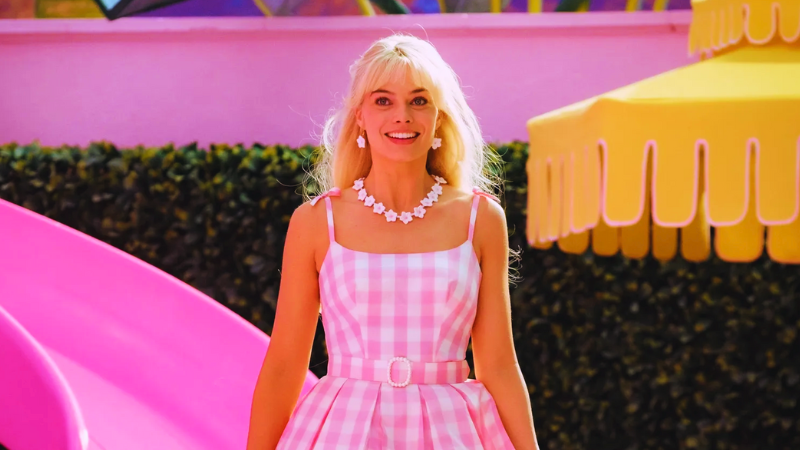
At a time when many actors are content to ride one career wave, Margot Robbie has repeatedly rewritten expectations—turning Barbie into a cultural spectacle, building her production company LuckyChap Entertainment, and quietly reshaping Hollywood’s gender dynamics behind the scenes. I recently had the opportunity to sit down with her in a sunlit Beverly Hills bungalow to explore how she balances creativity, ambition, and legacy-building. This dive explores Robbie’s strategies, influences, and visions for the future.
Reimagining an Icon: The Barbie Breakthrough
When Barbie premiered, few anticipated the emotional nuance and social insight hidden behind its bright pastels. Robbie’s decision to produce and star in the film was born from a desire to evolve Barbie beyond plastic conventions. She shared how early conversations with director Greta Gerwig and co-writer Noah Baumbach centered on the doll as a mirror of identity—comedic yet profound.
Robbie spoke about recording vlogs in character, playing scenes at home to capture teenage insecurities and midlife reflections. “Barbie has lived many lives,” Robbie said, “so I wanted to feel the tension between expectation and authenticity.” That creative itch informed the film’s tonal shifts, from satirical flights of fantasy to contemplative interludes in Barbie Land, where walls pulse with existential anxiety.
Barbie’s narrative balance was also deliberate. In scenes where Barbie confronts the “real world,” Robbie’s voice falters with longing—for purpose, for a role beyond play. She confessed to filming parts in city streets with actress America Ferrera to channel confusion and longing first, laughter second. The emotional arc, she added, resonates because it channels universal human questions about value, choice, and legacy.
LuckyChap Entertainment: Power Behind the Scenes
When Robbie launched LuckyChap in 2014 alongside friends Tom Ackerley and Josey McNamara, her goal was clear: create a production house that elevates female voices—writers, directors, producers—on and off camera. She emphasized that Barbie was just one piece of a broader mission to diversify storytelling. Titles like Promising Young Woman, I, Tonya, and Amsterdam mark robotic efforts to center women’s experiences across genres.
During our conversation, Robbie described the thrill of greenlighting a first-time director or championing a female-led script during early production meetings. She says the energy at LuckyChap is collaborative rather than hierarchical. “Every voice matters,” she insisted. “Even an assistant’s comment can shift a scene’s tone.”
Robbie acknowledged challenges: Hollywood still struggles to trust women-led projects creatively and financially. She cited the example of I, Tonya, where studios balked at dark humor unfiltered by romance. But the critical acclaim and award buzz proved Robbie right. “When audiences feel invited rather than toggled, magic happens,” she said.
The Emotional Toll and Reward of Producing
Robbie reflected on how producing pushes her to fight not just for creative choices, but for practical realities—writer pay, crew diversity, on-set safety. She admitted that while being the face of Barbie felt transformative, asking studio executives to fund the vision was profoundly stressful. “You pour your heart into a role,” she said quietly, “but producing it means you keep responsibility for it, every day.”
That responsibility shaped how Barbie was marketed. Robbie insisted on a campaign that reflected the film’s complexity: press photos were styled to look whimsical yet weathered; interviews avoided the typical puffery. She wanted audiences to see Barbie without assumptions—and to come willing to learn.
Off-camera, Robbie courses through festivals. She praised Sundance and Cannes for giving small voices platforms. She also acknowledged “gatekeepers” in Hollywood who still judge female films under different scrutiny. But her overarching message to the upcoming generation was hopeful: “Show greatness in your writing and your character choices. Don’t shrink. Don’t scream louder—share your vision louder.”
Genre Hopping: From Comedy to Cosmos
Robbie’s career path has been deliberate in million-dollar steps. She remembers the surprise when Martin Scorsese offered her a role in The Wolf of Wall Street, seeing it as a sign that big studios felt she had subtlety and emotional clarity. Later, she shocked audiences with her visceral, ballet-trained descent into Harley Quinn.
More recently, she’s blurred lines again. Babylon delivered bombastic Hollywood decadence; Dreamland explored Western intimacy; Don’t Worry Darling played with genre-tinged suspense. Robbie laughed when describing her taste: “I don’t like staying in one mood. I want to wander in other woods. Then invite cameras.”
Her genre-jumping earned acclaim. She refused to follow that with sequels or reboots unless there was genuine creative expansion at stake. With Barbie, she finally found that pivot—universal icon, radical film.
Barbie’s Cultural Resonance and Critique
It would have been easy for Robbie to treat Barbie as a brand pay cheque. Instead, she used the film to engage in radical critique: on patriarchy, consumerism, and homophobia. During awards season, she was asked why Barbie didn’t feel like a feminist speech. Her response was simple: being feminist meant dismantling systems, not celebrating them. That tension is baked into the script and Robbie’s production demands.
When she speaks of pride demonstrations or fashion week protests by queer creators, her eyes light up. She wants Barbie understood as a conversation. A metaphor wrapped in bubblegum. And yes, maybe a voice of her own next album. Robbie feels she’s reached a moment where call-backs can feel purposeful rather than stirring nostalgia.
Balancing Celebrity Life and Identity
Hollywood stardom can be choppy—and Robbie knows it. She’s tackled the pressures through meditation, therapy, and setting fierce boundaries. She recalls a time at a junket where unchecked paparazzi made her cry in a bathroom. She responds in part by deleting social media, spending time with her husband Ashton and dog Brandon. Ultimately, she recognizes stardom as a tool for quick-changing norms when wielded with mindfulness.
She opened up about family history and the sense of grounding it gives. Robbie grew up in small-town Australia before shifting to American fame. Her parents still send her handwritten letters with news of regional weather or roadside stories. She says that simple rhythm reminds her that acting is a role, but personhood surpasses it.
Looking Ahead: What’s Next for Robbie
Robbie offered tantalizing hints. Work is underway on a LuckyChap adaptation of The Ark, a historical disaster tale. She’s also exploring an adaptation of Terri, a novel about a nurse in circuit court. Her next directorial debut is in early stages—tentatively a psychological thriller set on a remote island.
She wants to expand the definition of “producer.” She imagines actors hosting training sessions for film crews, beyond callsheets and espresso. She dreams of a mentorship culture every new film should implement. Her long-term ambition? Develop a series where all ranks have positional mentorship teams. “Crew often don’t feel heard,” she explained. “That has to change.”
Hollywood Legacy: Vision Beyond the Screen
Robbie projects her ambition clearly: she wants to be remembered as someone who lifted others through artistry. Barbie isn’t just big; it’s designed to spark discourse—with characters wrestling with loneliness, masculinity, identity even while wearing fuchsia heels and surreal wardrobes.
I asked if legacy scares her. She paused, then said that legacy is less a statement etched on stone than a series of generosity. “Legacy lives in moments of creative trust—when someone who didn’t think it mattered suddenly believes it can.”
That faith became her mission. As she opened the door, backdropped by verdant plants, she made clear that building a legacy is an everyday choice. With each purple spotlight and elevated crew credit, Robbie keeps piling purpose on possibility—and Hollywood is watching as the final reel unfolds.
Final Thoughts
Margot Robbie isn’t content to shine alone. She’s navigating fame with intentionality, steering creative output with passion and kind rigor, and shaping Hollywood into a place where ambition and empathy can coexist. From Barbie’s cultural watershed to her producing activism and fearless genre pursuits, Robbie’s legacy is crystallizing in real time. For fans, filmmakers, and fellow creatives, the message is clear: ambition met with honesty can remake mainstream stories—and maybe mainstream—and make them more human.