When Avatar first premiered in 2009, James Cameron’s blue-skinned epic redefined the boundaries of cinematic spectacle. With its groundbreaking 3D technology, immersive world-building, and environmental themes, the film transported audiences to Pandora — a lush, dangerous alien moon where humanity’s thirst for resources collided with indigenous life. Over a decade later, Avatar: The Way of Water expanded the narrative into the oceans of Pandora and pushed the franchise into deeper emotional and visual territory.
Now comes the third chapter, Avatar: Fire and Ash, a film poised to shift the saga into even more complex and volatile terrain. As the title suggests, this installment promises to explore Pandora’s most volatile environments yet — volcanoes, deserts, and ideological firestorms that will test not only the characters but the entire Na’vi civilization.
With Fire and Ash, James Cameron is attempting something ambitious: not just extending a story, but evolving it. The lush Eden of Avatar and the aquatic elegance of The Way of Water are giving way to something rawer, darker, and more destructive — both literally and emotionally.
Setting the Stage: From Water to Fire
Each Avatar film explores a new biome and cultural aspect of Pandora, with the Na’vi clans reflecting their environment. The original focused on the Omaticaya, the forest-dwelling tribe. The Way of Water introduced us to the Metkayina, the reef people. Now, Fire and Ash turns to the volcanic and desert regions of Pandora, offering a setting not yet seen — a land of ash fields, lava rivers, and searing sunlight.
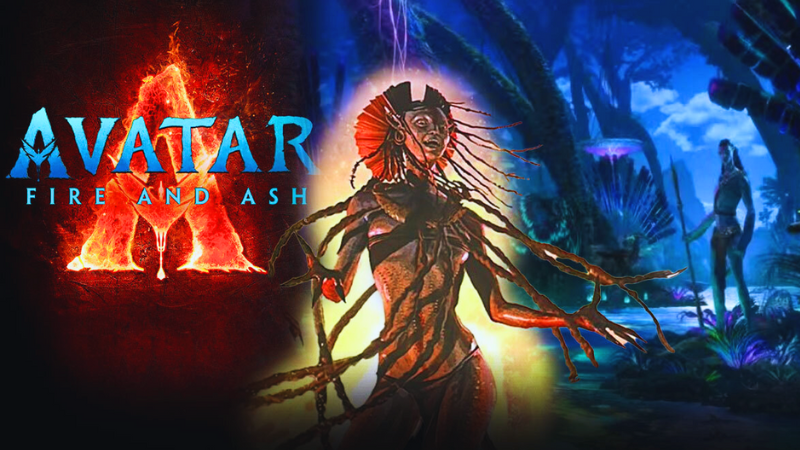
Reports and interviews suggest that this third film will introduce the Ash People, a new Na’vi clan who live in these scorched lands. Described by Cameron as “aggressive and morally complex,” the Ash People represent a significant departure from the more harmonious cultures we’ve seen so far. They are said to challenge the narrative of the Na’vi as uniformly noble and spiritual. This evolution signals Cameron’s intent to complicate the binary of good indigenous people vs. bad human invaders.
The transition from water to fire is also metaphorical. While The Way of Water was about healing, family, and emotional depth, Fire and Ash is expected to focus on conflict, trauma, and transformation. The terrain itself becomes a metaphor for grief, vengeance, and rebirth.
Characters in Crisis: The Sully Family Faces New Flames
At the heart of the Avatar saga remains Jake Sully (Sam Worthington), the former human marine turned Na’vi warrior, and Neytiri (Zoe Saldaña), his fierce, loyal partner. By the end of The Way of Water, their family had endured profound loss — the death of their son Neteyam being the most emotionally devastating blow. Fire and Ash is expected to examine the ripple effects of that loss.
Jake, once the idealistic outsider who became a leader, may now find himself hardened, perhaps even embittered. Neytiri, already marked by her deep ties to tradition and clan loyalty, may be drawn into new internal conflicts as her trust in outsiders continues to erode. How these characters respond to their grief — and how they lead — will be central to the narrative.
Kiri (played via performance capture by Sigourney Weaver), the mysterious daughter born of Dr. Grace Augustine’s avatar, is also expected to play a larger role. Her unexplained connection to Eywa, the guiding spirit of Pandora, could take on greater significance in a land where fire has scorched the old ways.
In interviews, Cameron has hinted that Kiri’s story is a “spiritual backbone” of the saga, and Fire and Ash may position her as the bridge between the Na’vi and Eywa’s deeper cosmic will — especially as Pandora begins to burn both figuratively and literally.
The Ash People: Villains or Victims?
Introducing a new Na’vi clan presents an opportunity to expand the cultural and political complexities of Pandora. The Ash People, known tentatively as the “Zhesa’na” in fan speculation (though this remains unconfirmed), are said to have adapted to life in harsh volcanic and arid conditions. Hardened by their environment, they are reportedly less trusting of outsiders and more aggressive in their diplomacy — perhaps even militaristic.
Casting rumors point to actors known for playing morally grey or antagonistic characters, which has fueled speculation that the Ash People may not be clear-cut allies to the Sullys. Instead, they may challenge their ideology, resist cooperation, or even see the other clans as weak for their response to the human threat.
If true, this development could mirror real-world conflicts among Indigenous groups when colonizers entered — not everyone responded the same way, and not all alliances were unified. This complexity would allow Fire and Ash to push past the simplicity of earlier narratives and offer a more nuanced exploration of what resistance and survival look like under existential threat.
Fire as Symbol: Destruction, Rebirth, and Rage
The element of fire has long been associated with destruction, but also with purification and rebirth. In mythologies across cultures, fire is both feared and revered — from the destructive flames of Shiva in Hindu cosmology to the phoenix’s fiery resurrection in Greek lore.
Avatar: Fire and Ash appears to be using fire as a central symbol: the fire of war, the fire of anger, and the fire of change. While the forest and water environments of the first two films embodied harmony and healing, the volcanic landscapes of the third film suggest a breaking point — a place where old orders are consumed and something new must emerge from the ashes.
This thematic shift could also reflect broader environmental metaphors. Wildfires, rising temperatures, and scorched ecosystems are increasingly part of Earth’s reality. Cameron, a vocal environmentalist, may be positioning Fire and Ash as a cautionary tale about the price of ecological destruction and the volatility of nature pushed too far.
RDA Returns: Humanity’s Persistence — and Progress?
Of course, no Avatar film would be complete without the looming presence of the RDA (Resources Development Administration), the human corporate entity that originally tried to mine Pandora’s unobtanium. In The Way of Water, the RDA returned with advanced technology and new strategies, including recombinant avatars like the resurrected Colonel Quaritch (Stephen Lang).
It’s likely that Fire and Ash will further develop this thread. With Quaritch still alive in his avatar form, and possibly grappling with his growing identity crisis, the film could explore themes of transformation, loyalty, and what it truly means to “be” Na’vi — or human.
Quaritch may also seek revenge for his son, Spider, who chose to return to the Sullys rather than flee with him. Their fractured father-son relationship could mirror the broader conflict between worlds and species — both defined by betrayal, misunderstanding, and hope for reconciliation.
Additionally, expect new RDA technologies suited to harsh environments: heat-resistant mechs, drilling bots, and perhaps even weapons that can harness or counteract volcanic energy. The RDA won’t just be back—they’ll be evolved.
Technology and Cinematic Innovation
James Cameron has always been on the bleeding edge of film technology. Avatar revolutionized 3D. The Way of Water introduced high frame rate storytelling and underwater performance capture. So what innovations might Fire and Ash bring?
Early reports suggest the film will utilize volumetric lava simulation, a technique that accurately models the flow of lava in photorealistic terms, combined with infrared-inspired cinematography to depict the unique atmosphere of volcanic biomes.
Cameron is also expected to expand real-time rendering techniques developed for The Way of Water, streamlining post-production while allowing greater creative freedom on set. That means Fire and Ash may look more realistic and immersive than anything we’ve seen before — especially in IMAX 3D or Dolby Vision formats.
Themes of Division and Unity
One of the biggest questions Fire and Ash will need to answer is: what happens when unity among the Na’vi fractures? In previous films, the clans united against a common threat. But with the introduction of the Ash People and their different worldview, Cameron appears to be exploring a more fractured resistance.
This internal conflict may be the most mature narrative direction yet. Real-world resistance movements are rarely unified, and ideological divisions often shape the course of history. Fire and Ash may dramatize this reality, forcing characters to ask hard questions: Should we compromise to survive? Should we fight to the death? What is the price of peace?
At the same time, the title’s “rebirth” implications suggest that through this conflict, something new may be forged — an evolved identity for both Na’vi and human characters alike.
A Crucible for Change
Avatar: Fire and Ash is shaping up to be more than just a continuation — it could be a creative crucible for the entire franchise. By embracing a darker tone, more complicated characters, and harsher landscapes, James Cameron appears ready to challenge his audience as much as he dazzles them.
If Avatar was about awe and wonder, and The Way of Water about emotional depth and healing, then Fire and Ash may be about reckoning — with grief, with violence, and with the choices that define civilizations.
Whether the film ultimately offers catharsis or cautions, its arrival will mark another milestone in the most ambitious cinematic saga of the 21st century.