When Marvel Studios released the Fantastic Four trailer—marking the debut of its long-awaited reboot—the internet erupted. A wave of excitement swept across social media platforms as fans shared screenshots, dissected scenes frame by frame, and began generating predictions. Joining the MCU has long been teased for Reed Richards, Sue Storm, Johnny Storm, and Ben Grimm, but now we finally have a glimpse of what Matt Shakman’s take on Marvel’s First Family might look like. It promises to be ambitious, heartfelt, and visually arresting, with clear ties to classic comic arcs and broad hints of MCU integration.
Below is an in-depth scene-by-scene breakdown of what the trailer reveals, what remains speculation, and how this newest version of the Fantastic Four could upend—and deepen—the superhero genre in the MCU era.
1. Opening Notes: Space, Science, and Rediscovery
The trailer begins with Reed Richards’ voiceover, describing aged notes from an old space program and humanity’s persistent enthusiasm for the unknown. The visuals transition from archival footage reminiscent of Apollo missions into more fantastical, cosmic imagery—a starfield, an unidentified capsule, and finally a stark shot of Reed, silhouetted in what appears to be a bio-lab. His voice resonates with introspection and curiosity, grounding the trailer in a tone that balances nostalgia, wonder, and foreboding.
This creative choice seems intentional. Unlike the more bombastic MCU entries, this Fantastic Four reboot appears rooted in introspection and cosmic wonder, mirroring the original comics’ spirit of science fiction mixed with sincere heart. It also establishes a thematic throughline: discovery comes with risk, and scientific ambition can redefine the world—sometimes in dangerous ways.
2. Meet the Team: Casting Choices with Nuance
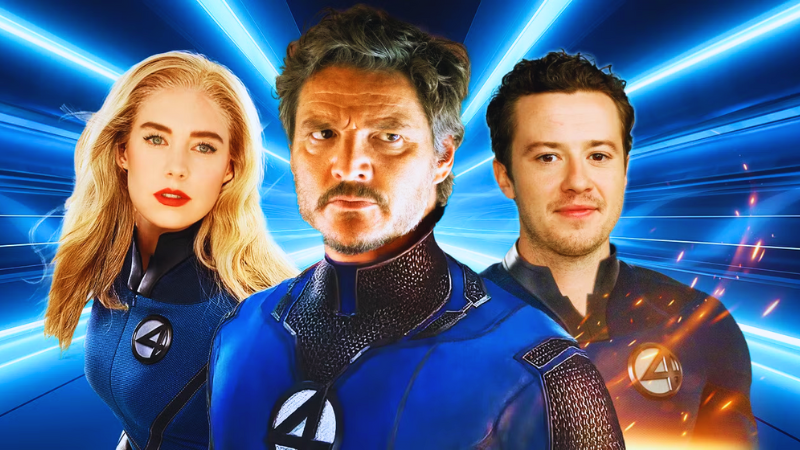
Reed Richards, played by Pedro Pascal, is the first to appear on screen. He emerges in stark white scientific gear, his expression serious, measured. There’s a visible tension between his eyes, hinting at intelligence tinged with obsession. Next appears Vanessa Kirby as Sue Storm, dressed in casual attire, holding tablets in a tranquil domestic setting. Her presence exudes calm confidence and analyzed observational power. She seems less shown in action and more in dialogue, suggesting a moral anchor.
Joseph Quinn’s Johnny Storm erupts onto the screen with energy. Skateboard in hand, he flirts, laughs. He’s youthful, vibrant, a natural foil to Reed’s brooding intensity. His gaze shifts quickly, encouraged toward the group that feels like a found family. Ebon Moss-Bachrach plays Ben Grimm, and while covered in Blues Brothers-level shadow and stubble, a t-shirt fluttering in a lab breeze suggests a man caught between everyday life and sudden transformation.
Introducing the cast in this particular progression—Reed, Sue, Johnny, Ben—suggests an underlying chronology. The focus transitions from discovery to emotional tension, playful exploration, and imminent peril.
3. The Cosmic Shift: The Mission Initiated
Screens flicker, cutting between a spaceship launch sequence and a domed facility perched at a base camp in the Arctic tundra. Scientists monitor data feverishly; alarms flash. Then we see Reed and Sue approaching a glowing energy field, reminiscent of the Negative Zone—but subtly different, almost biomolecular, with strands of starlight wrapped within. The approach hints that the MCU’s version of dimension travel may differ from the Zero Zone concept, yet still grounded in quantum physics.
Cut sequence highlights warning text: “Dimensional breach in 3…2…” followed by baseball cap and gloves falling from hidden clothing racks, adding tension and recognition of the strange geometry that might come from combining elemental suit tech with cosmic uncertainty.
Reed steps in. The trailer pauses. A pulse of light. A swirl. Then, brilliant exposure. The Fantastic Four’s powers ignite. Stretching limbs, shimmering energy, flaming contours evocative of the comic origins—only now silhouetted in cosmic haze.
4. Powers in Motion: Debut Strikes
We don’t see extended battles—just key glimpses. Reed extends an arm past normal human proportions; Sue’s wrist resonates with energy, bending little shards of light; Johnny’s palms glow orange around him like a fiery aura; Ben’s fist, large and stony, twists to break a chain. These initial flourishes are brief, though they confirm each member’s essential power set—Engineer. Protector. Firebrand. Grounded powerhouse.
Interestingly, the trailer focuses on emotional reaction close-ups. Reed’s hand trembles before he pulls it back from full extension. Sue’s gaze wavers between determination and doubt, emphasizing her moral burden. Johnny smiles with self-destruction, as if daring fate. Ben appears as a man stunned by sudden change, fists clenched, shoulders rigid, seeing his own transformation first.
These brief moments create rich emotional layers. They suggest that the team’s power isn’t just spectacle—it carries internal conflict. The MCU hasn’t shown many heroes grappling with their own existence this viscerally—not since the early days of WandaVision or Moon Knight. The Fantastic Four may become a grounded, emotional cornerstone for the next MCU chapter.
5. Family Dynamics and the Complexity of Bond
A standout moment shows Reed and Sue standing beside each other in uniforms—matching jackets, a shared badge—watching Johnny and Ben spar. The frame lingers just long enough for a familial exchange: Sue’s brow tightens as Johnny ducks a blow; Reed lowers his gaze, protective instinct piqued. There is no narration, no dramatic text overlay. Instead, it feels cinematic and intentional. They are scientists, lovers, siblings, colleagues holding space for a found family.
This emotional moment echoes Stan Lee and Jack Kirby’s original concept. Their Fantastic Four operated as a family unit—flawed, sarcastic, loving in fractured ways. The MCU reboot feels keenly aware of that DNA and wants your first emotional beat to be recognizing Reed’s fear, Sue’s intelligence, Johnny’s impulse, and Ben’s outrage—not just their powers.
6. Visual Worldbuilding: Negative Zone?
Dark corridors appear bathed in unnatural neon blue veins, reminiscent of classic Negative Zone imagery. The hulking furniture-like conduits in the clip suggest structural containment—something is being sealed, or someone is being held. We’re unsure whether it holds a villain or is part of the team’s research fail. A short flurry shows strange containment chambers with swirling lights like nebula formed fluid.
Next appears a figure in silhouette, robes swirling in front of glowing plasma gates. It could be Doctor Doom, cloaked and observing the team remotely. It could also be a stranded scientist or cosmic wanderer—yet the robes hint at magic mixed with technology. The Dark Lord of Latveria is rumored, and this shot confirms he— or a powerful new entity—is watching, unseen and ready when the chaos unfolds.
7. Cameos and Future Ambition
In a blink, the MCU’s iconic Hoechst Hydra symbol flickers across a monitor. A journalist’s voice, off-screen, says: “Is the public ready for the next stage of superhero science?” There’s an allusion to Hydra’s return—not as interdimensional outcasts but as internal empire builders researching cosmic breakthroughs.
Minutes later, we see a climb up yellow-tumed stairwells—long black staircases that we’ve never seen as part of MCU labs or explosions. It’s a new fortress setting, grand and monolithic, again evocative of a Doom castle. Reed’s voice returns over another partial frame—“When we unlock this door, everything changes.” His niece-brainy scientist face silently acknowledges that science can break reality, existentially speaking.
8. Dialogue Hints and Theme Underbelly
The trailer’s text lines sparkle between overt display. Reed murmurs, “What if everything we know…is only half the equation?” Sue responds in another overlayed frame: “Then we finish it.” That feels like a gambit. It suggests story stakes that go beyond “save the world.” They want to finish the equation—perhaps between family, science, life, death, meaning.
These thematic hints indicate that the MCU’s reboot will probably lean intellectual even as the conflicts frequently turn physical and visual.
9. Subtle Nod to MCU Integration
There is a soft fade referencing “Level 14 Security Clearance” reminiscent of the technology glimpsed in Spider-Man: No Way Home and Shang-Chi. Then, Reed looks over at what appears to be an off-screen—maybe Stark-derived—holographic arc reactor-like console. Though not explicitly MCU, there are tonal references that tie back to previously established superhero infrastructure.
No Avenger makes a cameo, which suggests that while Fantastic Four is connected, it won’t lean hard on other heroes. It seems more rooted in its own narrative scope, carrying scientific ambition as its engine, destiny as its goal.
10. A Glimpse of the Villainy to Come
At the trailer’s climax, we see a dark figure bathed in golden flame, raising a gloved hand. As the screen cuts to black, yellow robotic eyes open briefly beneath a hood. It’s a posture familiar from Doom’s comic appearances—a man of intellect fallen into darkness. Whether it’s Doom, Doctor Doom, or a new extreme villain, it is undeniably an image meant to terrify, to promise new threats aligned with science, not alien invasion.
Following that preview, we glimpse flame bursts in stark blue chambers, quick montage cuts, ripping doors, and the Fantastic Four training—sprinting in slow motion across scalded Earth, hands extended, claws trembling, fists turned to stone.
11. Fan Theories Surfacing in Real Time
Once the trailer dropped, fan communities sprang into overdrive. A prevalent theory cites subconscious ties to Kang the Conqueror. Reddit users pointed to the armor—specifically its stitching lines—as possible early nods to Nathaniel Richards. Another fan thread argued the trailer’s Negative Zone blue-lit corridors resemble Kang-era tech found in Quantumania.
Theory circles propose the dark hooded figure is in fact Reed Richards from a dystopian future—Reed who embraces Doom eventually, a Dark Reed who becomes a central villain in the Infinity saga revival. Some suggest he’s found the power of ‘Uncombined chromosomes’ and mutated himself, dreaming of ruling across timelines.
Another theory speculates Sue’s slight hesitance as she looks at the console might suggest future tension between cosmic responsibility and protecting loved ones. Could she later oppose Reed’s quest to save the world—or modify it? The idea that Sue might lead her own division in a split cast universe is gaining traction.
We also see hints of a Black Panther crossover. A fleeting pan across the lab wall reveals ultraviolet-painted symbols matching those found in ancient Wakandan rituals. This nod, though brief, suggests the Fantastic Four’s arrival won’t happen in a vacuum—they will eventually converge.
12. Cinematic Scale: Visual Continuity Meets Speculative Magnitude
From a technical perspective, the trailer suggests the MCU is once again raising its bar for spectacle and cinematic scale. However, the direction is neither straight high-octane nor out-there chaos. Instead, it merges Wes Anderson-like simplicity in designs with Blade Runner-style light fog and Wyeth-inspired vintage frames.
Camera pans linger. Reed’s lips move in reverie. Sue closes an arc gate door that looks like a basement storm hatch from Stargate. These visual decisions plant an aesthetic identity—futurist yet rustic.
13. Story Stakes Get Cosmic…but Stay Human
What stands out across the trailer is its inherent humanity. There are no mass casualty events shown, no fallen skyscrapers, no planetary threats. Instead, everything is set indoors or underground, in labs or small living suites, even across burning caverns. This contextual scale hints that the MCU reboot is about personal growth, nuclear trust issues, powerful family bonds, and the impact of choices.
When the stakes become cosmic later, they will feel earned. They will anchor in human expression first, as if Reed’s curiosity can either rebuild or destroy worlds—and that the first worlds it must navigate are Genial Households.
14. Expectations: The Multiverse’s Role
The MCU hasn’t been quiet about resurrection, time loops, fracturing timelines, pocket dimensions, and overlapping Cap realities. While the trailer doesn’t name the multiverse, it suggests these elements may play a role. Sue’s position at the console referencing “multiversal flux” in headers, and the presence of dimensional energy portals confirms that they aren’t investigating estrangement—they are an active part of Reed’s quest to join.
One mouth-onched fan noted that the power visualization looks more Ultimate Universe than mainline Earth-616. That could signal that Marvel is starting again but pulling from Francis Brubaker’s Infinity relic, rather than launching a stable stream of characters into the main MCU.
15. The Release Date and Phase Integration
The trailer doesn’t offer a release date. We do, however, know that Fantastic Four is slated for July 2025—next phase’s busy summer. One insider report mentions filming rescheduled third units in Spain and Atlanta, placing the team in water-based exterior rigs that look eclectic to ice fields. This could explain Reed’s snow gear in the trailer.
Beyond its standalone narrative, the implication is that Fantastic Four is launching during what Marvel Studios’ executives call “The Second Renaissance”—a period featuring fresh character arcs and cosmic introspection after Phase 4’s multiverse shocks. Placing Fantastic Four in that season, sans Avengers comebacks, signals Heaven-level commitment from Marvel Studios.
16. Final Notes and The Future of Heroism
Ultimately, the trailer works because it is brave enough not to reveal everything. It offers glimpses: a heroic moment, a scientific door opening, a transformation in process, a looming villain cloaked by flame, and a team testing itself. It plays with tone and expectation the same way Logan and Captain America: The Winter Soldier once did—emotional proximity, moral miscalculations, understated heroism.
From Reed’s extended hand to Sue’s measured gaze, to Johnny’s flame-ball teasing, to Ben’s quiet pathing forward—it sets up an ensemble that feels mismatched, evolved, burgeoning, and tradable. This is a first family debut that feels earned: dramatic, introspective, cosmic, yet grounded in Earth-born emotion. The takeoff is near. Whether it ends messy or glorious, one thing is sure: Marvel’s next entry anticipates an emotional and scientific journey unlike its previous blockbusters.
Conclusion
Marvel’s Fantastic Four reboot trailer does more than announce the return of the First Family. It expands on their identity—not as spandex-wearing heroes but as scientists, family members, moral agents, explorers of the unknown. It teases cosmic danger, universe-bending science, and interpersonal drama.
If executed with the introspection hinted at in the trailer, this film could become one of Marvel’s most emotionally grounded origin stories. And if fan theories ring true—solar villains, multiverse echoes, internal fractures—it could also become one of its most ambitious.
Here’s hoping the August 2025 release heralds both the birth of new heroes and the redefinition of what the MCU can be.