
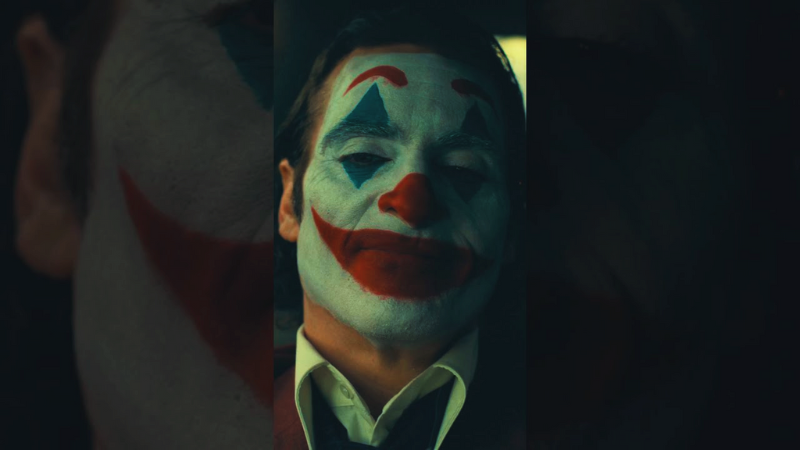
When the first trailer for Joker: Folie à Deux dropped, the internet went into a frenzy. Fans dissected every frame, searching for clues that could reveal the film’s direction, themes, and deeper psychological underpinnings. As a sequel to the Oscar-winning original, Joker, expectations are sky-high—but under the flashy veneer lies a complex ecosystem of symbolism, callbacks, and theatrical ambition.
Here’s an in-depth look at what’s likely real and what might be cinematic smoke.
A Return to Gotham… or a Dream?
The trailer opens on a familiar but altered Gotham City skyline. Blurred lights, pulsating neon, and an unsettling hush fill the cityscape. This seems to be Gotham but rendered through the fractured mind of Arthur Fleck, now fully embracing his Joker persona. The veil of glamor the city once wore looks torn and frayed, giving off the sensation that we’re not catching Gotham in reality—but in Arthur’s fever dream.
The idea of folie à deux, the film’s title referencing a shared psychosis, suggests that this world might be subjective. Director Todd Phillips appears to be exploring not just Gotham but the internal landscape of a man spiraling into and possibly dragging someone else down with him. The title hints at a narrative where boundaries between objective reality and delusion blur.
Lady Gaga as Harley Quinn or Something Else?
Few moments elicited more reaction than Lady Gaga’s surprise appearance as a costumed figure next to Joaquin Phoenix’s Joker. Is she Harley Quinn? Almost certainly. The look—playful, erratic, yet dangerous—matches the classic Harley archetype. But this isn’t the hypersexualized Harley we usually see in blockbuster interpretations. Instead, Gaga’s version seems more grounded, perhaps traumatized, existing in the same broken world as Arthur.
Every line she whispers in the trailer is layered with tension. Is she Arthur’s partner in crime? His therapist? His patient? The duo’s walk through the hallways, confetti swirling around them as they dance to Tomorrow Never Knows by The Beatles, feels less like a scene from Gotham and more like Arthur sprouting wings—for better or worse—through his connection to her.
Musical Madness: Jazz, Broadway, and Beethoven
From the first note of Tomorrow Never Knows, it’s clear the soundtrack plays a major role. This lyrical, hypnotic Beatles song evokes nostalgia, euphoria, and disorientation—all qualities matching Arthur’s psychological state. Yet the choice of such a recognized track suggests ambition: Phillips isn’t shy about leaning into musical territory. This isn’t just a crime saga; it may also be a dark, twisted Broadway.
We see snippets of choreography. Joker and Gaga move with theatrical poise in sequences that feel part cabaret, part carnival, painting an image of Gotham’s underbelly as a nightclub stage. The music isn’t background—it’s character. Even classical motifs, like brief echoes of Beethoven’s Moonlight Sonata, slip into the score. Arthur’s classical inflections—previously seen in the original film—are evolving. In Folie à Deux, we might witness music become a weapon and a therapy.
The Wayne Legacy and Visible Scars
Flashbacks or hallucinations revisit the Wayne mansion after the murder of the Waynes. The image of a young Bruce Wayne kneeling over his parents’ bodies adds cinematic gravitas. We don’t know why Arthur is seeing it again. Is he haunting Bruce’s psyche? Or is Bruce confronting his origins through Arthur’s twisted eyes?
The presence of decorations—balloons and streamers—over these old remains underscore the theatrical slant once more. Gotham’s legacy is worn like a stage set, and tragedy repeats itself in that frame. It raises an important question: does the film suggest Arthur caused the Waynes’ deaths? Controversial, sure, but not impossible in a world built on unreliable narration.
Romance or Toxic Co-Illness?
One of the biggest unanswered questions around Joker: Folie à Deux is the shape of the relationship between Joker and Gaga’s character. Their chemistry is undeniable. They move together like lovers, conspirators, or co-therapists in the mania. The film’s title—shared madness—has a romantic note, but the trailer hints at something darker.
Gaga’s encouraging smile as they beam in front of a mirror suggests complicity. Yet her expression shifts to alarm when Joker tightens his clown mask. Is she the architect or the victim of their madness? Perhaps she’s a spark within Arthur’s fire—a muse who helps him embrace delusion more fully.
Gotham as a Stage, Not a City
Color is one of the trailer’s unsung heroes. Whereas the original film was drab and muted, Folie à Deux bursts with psychedelic hues. Older sections in grayscale convey memory; new scenes pulse in neon. Greens, purples, and reds swirl against decaying backdrops, reinforcing the idea that Gotham’s landscape is less a place and more a projection of mental states.
The stunt configuration seems deliberately theatrical: a rooftop dance scene, a clown gathering that resembles a Bohemian revel. The production design mirrors a stage play turned inside-out. Gotham isn’t hiding its scars—it’s spotlighting them.
Police and Protest: Carryovers from the Past
Police sirens, protest bystanders, flickering cameras—all make appearances. The original Joker ended amidst mobs of angry citizens. This trailer returns to that unrest. It suggests a sequel isn’t just a character study but an escalation—a city in deeper political turmoil.
One brief glimpse of other clowns looking up at the camera, shocked, reinforces how far the movement has spread. Arthur may have birthed something he can’t manage. Is this what pushes his psychosis from an internal crack to a social collapse?
Gag Bits or Story Clues?
Small details peppered through the trailer are likely deliberate. The cardboard sign reading “Foolish Games Welcome”, Joker’s vintage microphone, and confetti raining down like fragmented memories: all signal theatrical artifice. Phillips may be challenging audiences to discern reality from performance, madness from method.
Even Gaga’s character flicking a lighter in the dark room with paintings strewn on the ground feels like ritual. Eleanor Roosevelt once said, “We are each on the brink of madness; the question is, how we step into it.” Every detail in the trailer seems to visually echo that precarious balance between sanity and chaos.
What We Don’t See—and Why That Matters
Notably absent from the trailer are key figures from the first film: Murray Franklin, Bruce Wayne grown-up, and Arthur’s mother. Does this sequel pick up after Arthur transformed Gotham and left these people behind? Or has the trauma simply moved on?
We glimpse none of Arthur’s therapy sessions, though his descent is deeper. There is no sign of the clown riot getting bigger. The trailer focuses solely on the central duo. It suggests the story narrows—twin descent into darkness, a co-authored spiral toward oblivion.
The Question of Plot–Without Spoilers
Though we lack full story details, the trailer hints suggest a rough plot structure: Act One follows Joker’s performance and early collaboration with Gaga’s character. Act Two heats up the shared psychosis—it will question their bond, emotional boundaries, and the pull of group madness. Act Three will likely boil over: murders, media reaction, and images of chaos colossally staged.
If the first film used a late‑night talk show to detonate its climax, Folie à Deux looks toward a gala-like setting with brighter lights and deeper stains.
How This Trailer Compares to Typical Comic-Based Sequels
Comic-book movie trailers often rely on explosive set-pieces and stacked cast lists. This trailer is different. It holds its cards close and arrests attention through mood and implication rather than spectacle.
It feels akin to Ari Aster’s Beau Is Afraid in tone—surreal and operatic rather than blockbuster kinetic. It’s rooted in character, driven by twin madness, delivered as a dance performance.
Batman and Joker sequels often drift into comic action, but Folie à Deux embraces art-house ambition. It aims for awards attention, not franchise saturation. This makes it simultaneously braver and more precarious than The Batman or any MCU tentpole.
The Cultural Moment: Why “Folie à Deux” Matters Now
Today’s culture— beset by performance anxiety, social media echo chambers, and toxic duos—makes Folie à Deux feel timely. It isn’t just clown glamor or East Coast psychodrama. It presents a psychological structure of two-willed co-conspirators in delusion and echo.
In political discourse, romantic tragedies, and celebrity scandals, we’ve seen folie à deux enacted again and again. This film may explore that dynamic, dramatize its cost, and ask whether escaping reality is ever freedom.
Joaquin Phoenix: Reinventing Arthur Fleck… Again
Joaquin Phoenix delved into pure tragedy in the original Joker. This time, he inhabits something different: a stylist, a conspirator, a narcissist turned cult leader. The confetti, the mic stand, the tango with Harley—they all speak of a man who has discovered ego as art.
Phoenix’s performance in the trailer is understated but fierce. He doesn’t yell, but the silence screams. His body language is tight, composed, perfect for a stage-ready predator. Expect his transformation to Atlanta-style performance-art-homicidal before the credits roll.
Lady Gaga: An Unpredictable Wild Card
Fans have speculated that Gaga’s character isn’t Harley Quinn at all. Perhaps she’s a singer Arthur falls for. Yet her costume—headdress, pearls, fishnets—maneuvers between Harley and flapper–club star, like a confident reinvention of Quinn’s iconography.
Gaga may be playing a theater actress whose art bleeds into madness. Her presence demands attention and her placement next to Arthur both grounds the psychosis in romance and turns it dangerous—like goldfish falling into oil.
The Filmmaking Craft: Phillips and Cohort Embolden the Madness
Todd Phillips abandoned comedy and embraced tragedy with the first Joker. With Folie à Deux, he amps that theatricality. Cinematographer Lawrence Sher uses soft focus and negative space to evoke painting more than flash. Costume designer Mark Bridges leans 1920s influences balanced with modern clowning kitsch. Composer Hildur Guðnadóttir works between melancholic strings and carnival creep.
The trailer demonstrates it’s a carefully crafted ecosystem. Nothing feels slapped on. Everything builds a tension rhythm: glitches, confetti, offbeat angularity. We’re inside a man’s mind, hearing his heartbeat on screen.
Frame-by-Frame Analysis: Key Trailer Moments
Rather than cover every second, a few standouts deserve close attention. Arthur kneeling before Bruce’s parents? Mirrors his kneeling by Sophie Dumond’s child in the original film—an unwitting trick of pathos. The confetti-filled dance mirrors Jared Leto’s ‘pad-shot’ entrance in Suicide Squad (2016), but toned down, more intimate.
One shot where Joker grips grossed-out after a mirror crack suggests violence isn’t drive—mad beauty is. The small flinch that precedes his smile matters more than the eventual gunshot we don’t hear.
Fan Reactions: What the Internet Thinks
On Reddit and Twitter, fans are salivating. Some identify deeper homages to the Broadway musical Cabaret, with Gaga’s crimson wig echoing Liza Minnelli. Others see horror influences like Black Swan, with hair and makeup underscoring shared psychosis between protagonists.
Social-media speculation has exploded: a third actor might represent a true delusional group—like the third in Screenplay trilogy. A feminist reading suggests that own demise has authority too.
Theories swirl: Is this a shutdown moment, an exit from Gotham for both Arthur and Gaga? Will Nurse Penny (the therapist from Part One) return as a voice of reason, or will she be absorbed into stage-lights madness?
What This Means for the DC Universe
Joker and Folie à Deux are treated with loving separation from the larger DC Extended Universe. These characters don’t coexist with Superman or Wonder Woman—they live in a self-contained, cinematic realism fraction. Neither Batman nor Bruce Wayne has relevance here—except as trauma.
This philosophy has freed Phillips to craft high-art cinema instead of turning Joker into a 13-film franchise. He’s opted for a duology, or perhaps trilogy, that rewards deep dive rather than shallow cross-over appeal.
Fantasy or Facade?
Is the trailer a bromide for a killer musical comedy—or a dark descent into shared psychosis? Probably both.
What’s real? The trailer’s technical achievements, the sincerity of Phoenix and Gaga, the layered mise-en-scène. What’s likely false? Assumptions that this is just a love story or typical sequel. It’s shaping up to be an elegy, a warning, and a celebration: love can be the sweetest monster of all.
If The Joker gave us the man at the edge, Folie à Deux may deliver us the partner who watches him fall—and begins to believe she can fly too.
A Limited Run at Madness
There are suggestions this sequel is the finale. The stunt-like story suggests a capstone rather than a sprawling franchise entry. A joker movie that ends with Harry on stage alone? Maybe.
But audiences may crave one more step: a reconciliation, an acknowledgment these two can’t cohabit normal. Perhaps the title becomes Folie à Trois or Folie à Sept—madness tends to spread, after all.
Conclusion
Joker: Folie à Deux isn’t just a trailer—it’s an invitation. An invitation to enter a skewed version of Gotham’s greatest psycho, to watch him tango with another fractured soul, and to feel exhilarated, suffocated, liberated, all at once. It’s precisely the kind of film that blossoms when people whisper, debate, and watch the frames over and over again.
This trailer is no teaser—instead, it’s a manifesto. The film will be loud, unsettling, mesmerizing. What’s real and not? That depends on whose reflection you trust when the carnival lights dim.