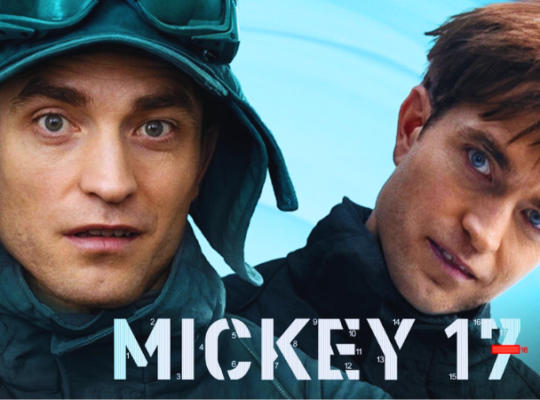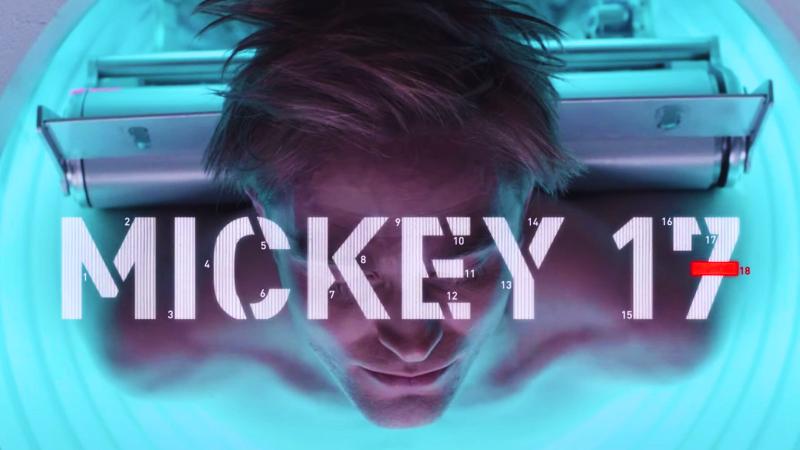
In the world of contemporary cinema, few names command attention like Bong Joon-ho. The South Korean director stunned the industry in 2019 with Parasite, a genre-defying masterpiece that became the first non-English-language film to win the Academy Award for Best Picture. Following that historic triumph, cinephiles have been eagerly awaiting his next move. Now, the wait is nearly over. Bong’s next feature, Mickey 17, is on the horizon — and if early buzz is anything to go by, it’s one of the most ambitious sci-fi films in recent years.
Slated for release by Warner Bros. in 2025, Mickey 17 is adapted from the novel Mickey7 by Edward Ashton. The film marks Bong’s return to science fiction after his cult-favorite Snowpiercer (2013) and his genre-defying creature-feature The Host (2006). With a blend of intellectual depth, existential questions, and a star-studded cast led by Robert Pattinson, Mickey 17 is shaping up to be more than just a space odyssey — it’s a meditation on identity, mortality, and what it means to be truly human.
What Is Mickey 17 About?
At its core, Mickey 17 is a high-concept science fiction story with philosophical implications. Based on Mickey7, the 2022 novel by Edward Ashton, the story follows Mickey Barnes, an “Expendable” — a disposable employee sent on deadly missions that no one else wants. When Mickey dies, a new clone is regenerated, complete with the memories of the previous iterations. By the time we meet him, Mickey is on his 17th incarnation.
The novel is equal parts dark comedy and cerebral thriller, examining how identity, memory, and mortality intersect when death becomes… optional. Mickey is keenly aware of his replaceable status and begins to question the morality of a society that sees him as disposable — and more crucially, what happens when he refuses to die.
Bong Joon-ho, known for elevating genre stories with rich social commentary (Parasite, Okja, Mother), seems like a perfect fit for this source material. His adaptation will reportedly not follow the book beat-for-beat but instead build upon its central ideas — much like Stanley Kubrick’s The Shining reimagined Stephen King’s novel.
The Director: Why Bong Joon-ho Is the Right Voice for This Story
Bong Joon-ho has never made the same movie twice. His filmography spans black comedy, horror, political satire, dystopian sci-fi, and class struggle. Whether he’s crafting monster horror in The Host or train-bound allegory in Snowpiercer, he’s a master at grounding genre films in emotional and political truths.
In Mickey 17, Bong appears to be engaging with some of the biggest questions in science fiction:
- What is the self when consciousness is transferable?
- Is a clone truly a copy, or a continuation?
- Can individuality exist in a world where lives are mass-produced?
Bong’s sensibilities — his balance of dark humor, tension, and humanity — will be crucial in bringing nuance to such questions. While most sci-fi films lean heavily on spectacle, Bong’s strengths lie in character-driven storytelling. Expect Mickey 17 to look inward as much as outward.
Robert Pattinson: The Perfect Mickey?
At the center of the film is Robert Pattinson, whose career transformation over the last decade has been nothing short of fascinating. Once best known for playing Edward Cullen in the Twilight series, Pattinson has since rebranded himself as one of the most daring actors of his generation, thanks to roles in Good Time, The Lighthouse, Tenet, and The Batman.
In an interview with GQ, Pattinson described Mickey 17 as “one of the most unusual scripts I’ve ever read.” He’s not just playing a sci-fi action hero — he’s portraying a character that dies repeatedly, inherits memories, and questions the very nature of his soul. This role offers the kind of internal conflict that Pattinson thrives on, and early rumors suggest he may even play multiple versions of Mickey on screen.
Casting Pattinson is also a smart move from a commercial perspective. He brings both indie credibility and blockbuster appeal — a rare balance that suits Bong’s unique vision.
The Supporting Cast: A Talented Ensemble
Though Mickey 17 is centered on Pattinson’s character, the supporting cast is equally impressive:
- Steven Yeun (Minari, Nope) is rumored to play a morally ambiguous commander. Yeun’s quiet intensity and nuanced performances make him ideal for complex roles.
- Toni Collette brings her genre pedigree from Hereditary, Knives Out, and The Sixth Sense. She’s expected to play a high-ranking official overseeing the cloning process.
- Naomi Ackie (Star Wars: The Rise of Skywalker, I Wanna Dance with Somebody) is reported to portray an underground revolutionary figure who questions the ethics of immortality.
- Mark Ruffalo, known for balancing intelligence and warmth, may appear as the colony’s lead scientist or politician.
The ensemble speaks volumes about the film’s tone: cerebral, emotionally complex, and ethically charged.
Production: World-Building and Visual Innovation
Mickey 17 was filmed primarily at Warner Bros. Studios in the UK, with additional set construction and post-production taking place in South Korea. Bong is working once again with cinematographer Darius Khondji (Seven, Okja, Uncut Gems), whose textured lighting and frame composition are ideal for dystopian futurism.
The visual language of Mickey 17 is expected to be a blend of sterile corporate minimalism (think Gattaca) and industrial decay (à la Blade Runner). The colony setting — a hostile, frozen planet called Niflheim — is central to the film’s thematic weight. Cold, uninhabitable, and punishing, it reflects the expendables’ status within the social hierarchy.
Reports suggest Bong is using a mix of practical sets and digital environments, avoiding over-reliance on green screen. The aim is to create a tactile future that feels real — echoing his approach in Snowpiercer, where each train car was designed to reflect a specific class level.
Themes: Mortality, Ethics, and Exploitation
While Mickey 17 promises thrilling science fiction, at its heart lies a deeply philosophical inquiry. Several key themes emerge:
1. Expendability and Labor
The concept of an “Expendable” is a chilling reflection of late-capitalist labor practices. Mickey is seen as a tool — reusable, replaceable, and void of personal value. This raises profound questions: In a world that commodifies life, can individual dignity survive?
2. Memory and Continuity of the Self
Each Mickey iteration possesses the memories of its predecessor. But do memories equal identity? Is Mickey 17 the same person as Mickey 1, or simply a mimicry with echoes of experience?
Bong is no stranger to moral ambiguity. In Okja, he explored genetic engineering and animal cruelty through a lens of compassion and absurdity. Mickey 17 offers similar potential: using sci-fi cloning to interrogate the soul.
3. Colonialism and Class Structure
The off-world colony is built on exploitation — both of labor and environment. Expendables like Mickey serve at the whims of colonists who enjoy privilege and safety. The film appears to critique not just cloning but also the imperialistic drive to conquer and control new worlds without moral consequence.
Comparison to Sci-Fi Classics
Mickey 17 joins a rich lineage of cerebral science fiction films that use speculative technology to explore human nature. Here’s how it compares:
- Blade Runner – Both question what it means to be human through synthetic beings with memories.
- Moon – Duncan Jones’ 2009 film also featured clones used for labor, confronting themes of identity and betrayal.
- The Prestige – Christopher Nolan’s film tackled sacrifice and duplication with a similarly haunting tone.
- Elysium – Neill Blomkamp’s film visualized extreme class disparity through sci-fi allegory, which Mickey 17 may echo.
However, Bong’s style — mixing satire, pathos, and character intimacy — gives the film a distinct voice within the genre.
The Book vs. the Film: What’s Changing?
Author Edward Ashton has been actively supportive of Bong’s adaptation, calling it “an interpretation rather than a direct translation.” While Mickey7 is told in first person with a dry wit, Bong’s version is expected to be more expansive, with additional characters and restructured plotlines.
Some speculate the title change from Mickey7 to Mickey 17 signals that the story will begin further into Mickey’s reincarnation cycle, where the existential dread is even more pronounced. That shift also gives Bong creative freedom to diverge from the novel’s structure while retaining its philosophical DNA.
Anticipation and Industry Impact
When the teaser for Mickey 17 dropped in late 2024, it sparked immediate online buzz. The teaser featured haunting shots of Pattinson emerging from a regeneration pod, intercut with glimpses of barren landscapes, faceless workers, and a digital voice asking, “Do you remember who you were?”
Fans of Bong’s work and lovers of heady sci-fi immediately took notice. As one Reddit commenter put it: “If Blade Runner, Ex Machina, and Parasite had a baby, it would be Mickey 17.”
Industry insiders also see the film as a potential awards contender. With Warner Bros. backing and Bong’s track record, Mickey 17 could bridge the gap between genre storytelling and prestige cinema — much like Arrival, Dune, and Her.
Why Mickey 17 Could Be a Game-Changer
In a media landscape crowded with sequels, shared universes, and reboots, Mickey 17 stands out. It’s original (at least cinematically), risk-taking, and helmed by one of the most visionary directors of our time. It deals with existential stakes, not just planetary ones — and that’s rare in big-budget sci-fi.
More than anything, it represents a fusion of talent, theme, and timing. In an age grappling with AI ethics, climate collapse, and questions of identity in a digital world, Mickey 17 feels both urgent and timeless.
Whether it becomes a cult classic, critical darling, or box office success remains to be seen. But one thing is certain: Bong Joon-ho isn’t just making science fiction. He’s crafting human stories in alien skins — and we can’t wait to see what he has in store.