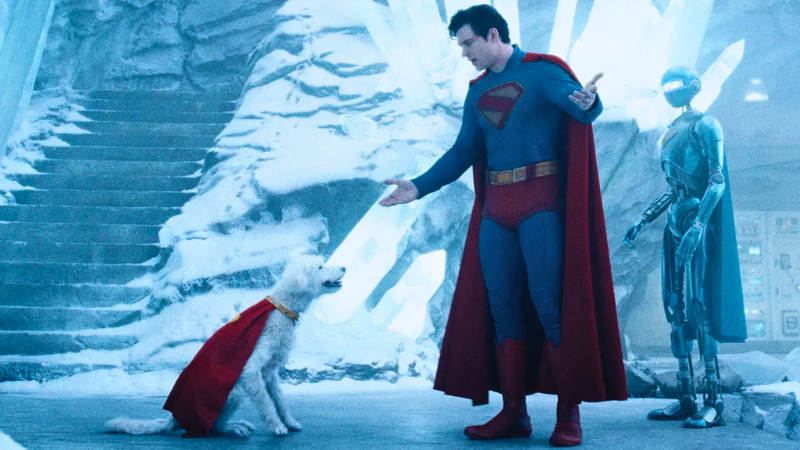
As Superman prepares for its July 11 debut, the question on every Hollywood mind is straightforward: how high will the Man of Steel fly in his opening weekend? Early tracking paints a robust picture, with one leading service forecasting around $130 million domestically. Yet DC Studios, helmed by writer‑director James Gunn and co‑leader Peter Safran, remains far more cautious—publicly suggesting a $100 million plus launch. This conservative stance serves both to temper expectations and to insulate against the unpredictable variables of tentpole marketing.
Tracking the Titan: $130M Takes Flight
Three weeks before its U.S. release, industry trackers provided headline‑grabbing forecasts. One National Research Group (NRG) estimate suggested a commanding $135 million domestic launch. That number has since slightly adjusted to $130 million—still a premium result. The film will roll out across North America and internationally in 78 markets, with global openings expected to eclipse comparable figures. These projections follow a disciplined promotional campaign that’s showcased positive reviews, praising Gunn for recentering the hero’s “human heart” in this new post‑Snyder era reboot.
Critics have rewarded the effort. As of early July, Superman held an impressive 84 percent approval on Rotten Tomatoes. Headlines from outlets like The Verge and Entertainment Weekly call James Gunn’s take on Superman a return to emotional levity and charm, offering heightened appeal in contrast to darker DC entries. Such sentiment bodes well for audiences eager for a lighter‑toned, optimistic blockbuster.
A Legacy of Launches: Context from Past Debuts
Looking back, the original Batman v Superman: Dawn of Justice holds the record for the strongest Superman debut with a 2016 domestic opening of $166 million. Man of Steel (2013), also directed by Zack Snyder, began with $116 million. A decade earlier, the four‑day total for Superman Returns (2006) reached $84 million, though spread over six days—a smaller palm.
The pattern reveals that while Superman remains a marquee draw, he’s never hit the stratospheric heights of Marvel’s juggernauts. Gunn and Safran’s pitch is deliberate: $100 million plus is a win. Anything above that becomes a strong statement that this new era of DC is truly on the rise.
DC Studios’ Pragmatic Messaging Strategy
Gunn’s dual role—director and DC Studios co‑CEO—gives him unusual sway over promotional tone. When asked, he has walked a fine line: boosting excitement while also acknowledging “superhero fatigue” as a looming threat. His messaging teases hope and justice in a time when “people are looking for heroes…good and decent human beings.” Still, he and Safran have resisted publicly endorsing the $130 million figure.
Their strategy is tactical. By forecasting conservatively, expectations remain grounded. If Superman lands at $110 million, it may still be considered a credible victory. Conversely, if it hits well over projections, the film becomes the cinematic comeback story DC desperately needs. In a landscape where both critic and franchise fatigue can sink even superheroes, such management of expectations is essential.
Casting the Right Team: Audience Connection
Adding to the film’s weight is a cast carefully selected for chemistry and appeal. David Corenswet, tapped early, brings an earnest quality to Clark Kent—a modern blend of grace and humanity. Rachel Brosnahan, known for her commanding presence in The Marvelous Mrs. Maisel, plays Lois Lane with poise and strength. Critics have noted the duo’s romantic connection and warmth, even if the script occasionally underutilizes Lois’s investigative edge.
Nicholas Hoult’s Lex Luthor offers nuance and intensity, fulfilling the role of a calculating technocrat rather than a maniac. Supporting cast members such as Skyler Gisondo, Isabela Merced, Nathan Fillion, and Edi Gathegi add layers of texture to this re‑imagined world—each character appearing to serve thematic arcs while rounding out a broader ensemble.
Early Critical Response: Solid but Uneven
Reviews suggest a well‑received foundation: critics commend Gunn’s tonal refresh, calling the film “living, breathing comic book” come to life. They praise Corenswet’s earnestness, Brosnahan’s emotional presence, and Gunn’s directional style. Entertainment Weekly believes the visual spectacle soars, and Deadline notes early audience reactions are positive. But not every review is glowing. Some critics point to an overloaded story, where political and meta themes distract from the core narrative flow.
Regardless, an 84 percent critics score positions Superman as the most acclaimed live‑action iteration of the character in years—outpacing prior Snyder or Singer attempts. Such positive reviews could help sustain momentum through the opening weekend and into the weeks that follow.
Box Office Pressures: A Fresh Start for DC
This Superman isn’t just a reboot—it’s a cornerstone in James Gunn and Peter Safran’s broader plan to reinvent the DC Universe. The stakes are enormous; this is the first entry under their leadership. Upcoming projects, including the Green Lantern HBO series and a 2026 Supergirl film, will live or die by the success of this launch. A powerful domestic debut is more than a number; it’s a message of confidence.
But launching at $130 million might not be enough alone. Industry insiders now suggest that the real goal is a $500 million global haul—enough to justify the nearly $225 million production budget plus marketing, and to convince Warner Bros. executives and investors that the DCU reboot can compete with Marvel.
Tracking Dynamics & Competitive Landscape
Tracking is never static. The initial $135 million prediction came from early surveys gauging fan reaction to trailers and marketing. Since then, competition has risen on the box office horizon. Jurassic World Rebirth, with its nostalgic draw, has already posted blockbuster numbers—surpassing $300 million globally in its opening weekend. Analysts now suggest that the Jurassic sequel’s late surge could shift some casual moviegoers away from Superman, leaving DC to rely heavily on family audiences, superhero fans, and positive word of mouth.
Notably, Superman markets well in Europe and Latin America—regions less affected by Jurassic’s hold—potentially offsetting North American dips. Asia may trend differently, with family adventure fare historically overshadowing superhero content. Reviews and audience feedback in early release regions will be closely monitored to see how those unvarnished responses shape the final tracking figures.
Fan Campaigns and Snyderverse Backlash
Even before release, Superman has weathered a wave of fan‑driven negativity, particularly from staunch defenders of Zack Snyder’s earlier films. Online campaigns aimed at dropping fan ratings, leaking critical spoilers, or mobilizing negative sentiment have circulated. Gunn has publicly addressed this, urging calm and dismissing the backlash as limited in scope.
To avoid being drowned out by negativity, early screenings have been conducted internationally, creating authentic fan reactions that preempt spoiler turbulence. These screenings aim to surface genuine emotion, build enthusiastic buzz, and reinforce the film’s value through real audience response—not engineered social media criticism.
Global Outlook: Overseas Potential
Beyond the domestic market, Superman opens in 78 regions simultaneously. Analysts expect a matched performance abroad—potentially another $100 million in its opening weekend. The film has established resonance in Europe and Latin America, where superhero narratives tend to find reliable support.
In Asia, the reception may be more nuanced. While the character is globally recognized, the genre’s appeal is more competitive with franchise-heavy competition. Still, the presence of cinematic spectacle, Lex Luthor’s political corruption themes, and heroism with moral clarity may lean into universal values that translate across cultures.
If Superman generates a $200–250 million global opening weekend, it can ride a strong wave into a summer where other blockbusters such as Mission: Impossible 8, and The Flash may crowd screens in July and August.
From Tracking to Trends: What to Expect
As opening day draws near, tracking will undoubtedly tighten. A range was initially projected from $125 million to $145 million, reflecting both ardent industry hopefuls and cautious studio estimates. This balanced messaging allows DC to shape perception around either outperformance or respectable returns.
A domestic opening north of $130 million would signal a healthy appetite for Gunn’s optimistic hero, positioning the film among notable tentpole successes, though not eclipsing Batman v Superman. Conversely, a $100–$120 million front must be contextualized as a win, provided overseas markets bring supplementary revenue.
The next few days will be telling. Positive early reviews hold weight, as does the summer release schedule. Tracking may yet adjust up or down depending on ticket demand, competition, and pre‑sale numbers.
The Road Ahead: Sustainable Success
Despite premiere success or not, long‑term performance will determine the DCU’s future. A strong box office debut must be followed by legs through summer, a signature audience return, and robust global engagement. Franchise building depends more on sustained interest than a single weekend peak.
By integrating family friendliness with superhero spectacle and emotional core, Superman stands a strong chance. Its quality, as indicated by praise from The Verge, Polygon, and IGN, may support repeat viewings and word‑of‑mouth growth—especially if audience sentiment aligns with critics.
Final Thoughts
James Gunn’s Superman carries the weight of legacy and expectation. Positioned as a beacon for DC’s next chapter, it needs a debut between $100 million and $135 million to feel successful—and ideally, trending upward beyond.
With strong reviews, loyal core fans, and international strength, Superman is well‑poised for a healthy launch. But even a near‑$100 million opening should be considered a strategic win in the context of reboot optics, evolving genre trends, and growing franchise sagas. Come Monday, the studios won’t just count totals—they’ll ask whether the world is ready to believe again in truth, justice, and the American way.