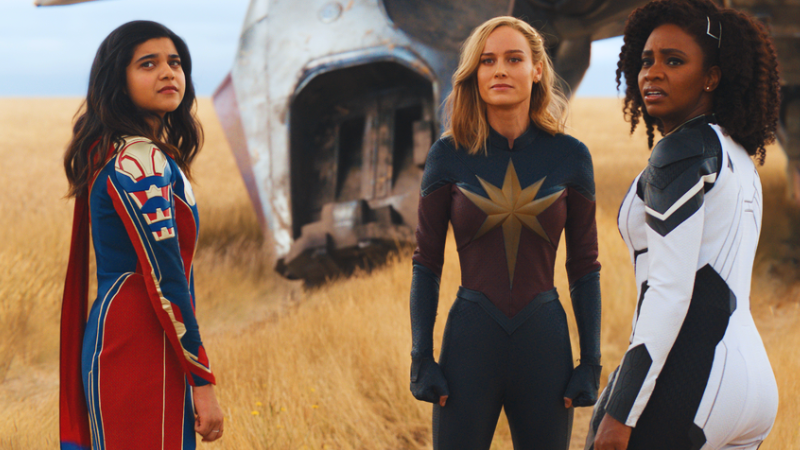
When The Marvels exploded onto screens, audiences were immediately swept into a world of vibrant visuals, mind-bending cosmic energy, and character-driven action. Directed by Nia DaCosta, this Marvel Cinematic Universe (MCU) chapter follows the entangled journeys of Carol Danvers (Captain Marvel), Monica Rambeau, and Kamala Khan (Ms. Marvel), weaving their stories through a thrilling interstellar adventure. But behind the dazzle of photon blasts and gravity-defying battles lies an incredibly complex production—one that required precision, creativity, and enormous collaboration between visual effects artists and stunt professionals.
This deep dive explores how The Marvels achieved its kinetic magic, the practical techniques behind the spectacle, and how it carved out unique visual storytelling in a universe already brimming with superhuman spectacle.
Nia DaCosta’s Vision: Personal Storytelling with Cosmic Scope
As the first Black woman to direct a Marvel film, Nia DaCosta brought fresh perspective to a franchise renowned for its scale. She emphasized that The Marvels wasn’t just about action; it was about connection—between the characters, their powers, and their personal arcs. That emotional core needed to be reflected visually, not just narratively. Her direction guided the entire production toward balance: the spectacular should never overshadow the sincere.
This approach meant that even the most outrageous sequences, like battling an alien in a singing city or escaping via teleporting flerken kittens, had to be grounded in character emotion and motivation. The visual and stunt teams were charged with executing these moments in ways that felt cohesive, emotional, and real—even when what they were filming was anything but.
The Heart of the Spectacle: VFX Supervision and World Building
At the center of the VFX effort was production supervisor Tara DeMarco, who previously worked on WandaVision and Ms. Marvel. Her challenge was to orchestrate an intergalactic ballet of powers, worlds, and portals—each unique, each grounded in real-world physics and aesthetics.
The team developed power “languages” for each heroine. Captain Marvel’s energy bursts emitted bright, white-blue streaks. Monica Rambeau’s abilities manifested in luminous, fragmented light spectrums, mimicking the properties of light refraction and absorption. Kamala Khan’s power took on a crystalline, almost stained-glass structure—a visual metaphor for her youthful creativity and imagination. Each power set came with its own lighting requirements, interaction with physical environments, and unique animation protocols.
Multiple visual effects vendors, including ILM, Wētā FX, Sony Imageworks, and Trixter, worked on these sequences. Managing these assets across time zones and studios required tight coordination. Cloud-based systems and daily syncs allowed for iteration across departments, with each studio assigned specific power sets and sequences to streamline workflow.
Digital Multiplication and Cosmic Chaos: Flerkens and Kittens
One of the most memorable—and humorous—scenes in The Marvels involved an emergency evacuation conducted not by space ships or teleporters, but by flerken kittens. Yes, a horde of teleporting feline aliens was responsible for saving an entire crew.
On set, real kittens were used for close-ups and simple movements. These kittens were trained to perform specific actions like walking toward a mark or climbing into a container. However, the final sequence called for hundreds of flerkens. Visual effects artists used the footage of these real kittens and digitally multiplied them. Tentacles, glowing effects, and swallowing animations were added in post-production, turning adorable moments into intergalactic oddities.
To make the scene work, actors had to perform with placeholders or even nothing at all. The timing and choreography required them to respond to imaginary cats and move in sync with where digital flerkens would later be inserted. This demanded not just acting talent, but acute spatial awareness and trust in the effects team to complete the illusion.
Aladna: Musical World Building
Another standout visual sequence takes place on the planet Aladna, where communication happens through song. This colorful, musical interlude was one of the boldest creative choices in the film. The team created entirely original alien architecture and designs that shimmered and shifted with the rhythm of music.
On set, musical tracks were played back during filming to guide both the choreography and the camera movements. Practical sets were built for close interactions, but much of the environment was extended using visual effects. Floating holograms, singing crowds, and sparkling atmospheres were layered in post-production, all designed to pulse in rhythm with the characters’ melodies.
This fusion of choreography, music, and effects required precise coordination between departments. Costumes reflected light in specific ways to assist with post-production compositing, while camera work was tightly blocked to emphasize movement and flow. The result was a sequence that felt theatrical and cinematic—an operatic burst of color in the middle of a cosmic adventure.
Portal Physics and Character Swapping
One of the central conceits of The Marvels is that the three heroines constantly switch places when they use their powers simultaneously. This portal-swapping mechanic added complexity to both action and narrative, requiring that each movement flow seamlessly into the next.
To achieve this, the stunt team and VFX supervisors had to storyboard sequences down to the millisecond. For example, a punch thrown by Kamala Khan on one planet needed to be caught by Monica Rambeau mid-battle on a space station. These transitions were filmed on different sets, sometimes with different lighting setups and background elements.
Motion capture and previs animation played major roles here. Actors or stunt doubles performed their sequences individually, often against green screens or partial sets. In post-production, these movements were aligned, timed, and blended to appear as if the characters were leaping through time and space in a single, continuous shot.
This demanded extraordinary timing and consistency from actors, especially Brie Larson, Teyonah Parris, and Iman Vellani. They had to match body movements, expressions, and even breathing rhythms with actions they hadn’t physically experienced.
Practical Stunt Work: Harnesses, Wires, and Combat Choreography
Though the film leaned heavily on visual effects, many of its most dynamic action scenes began with practical stunts. The stunt team constructed extensive rigs for wire-fu sequences, allowing characters to float, fly, or crash through the air while appearing weightless.
For mid-air combat, dual rigs were used. One rig suspended the actor, while the other allowed for dynamic movement: swooping arcs, sudden falls, and spins. These sequences were rehearsed meticulously, often with the actors themselves performing key beats.
Fight choreography also focused on individuality. Captain Marvel’s fighting style emphasized power and efficiency—straight punches, blast attacks, and aerial dives. Monica Rambeau, newly discovering her powers, fought more defensively, incorporating dodges, shields, and hesitations. Kamala Khan’s movement was playful and erratic, as she combined hand-to-hand combat with sudden power expansions of her limbs.
Each fighting style informed how the stunts were designed and how the visual effects interacted with the environment. Dust patterns, debris movement, and lighting shifts were mapped based on the characters’ trajectories.
Lighting the Unreal: Making Powers Look Natural
Creating believable lighting for cosmic powers posed a unique challenge. Energy effects emit light, which needs to reflect realistically on nearby surfaces. To sell this illusion, the lighting department used interactive lighting—LED panels, laser strobes, and flickering sources—that pulsed in real-time on set during performance.
For example, when Monica phases through a wall or Kamala expands her limbs, nearby objects on set would actually glow or cast shadows in sync with the actors’ movements. These practical lighting elements gave visual effects artists real-world references for shadows, highlights, and falloff, making the composited energy effects feel grounded in the environment.
This combination of practical lighting and digital enhancement is what allowed many scenes to feel tangible, even when filled with impossible visuals.
Space Battles and Sabre Station
The scenes set on Sabre station and in deep space required massive green screen environments and digital set extensions. These sequences featured multiple layers: interior action on the station, exterior zero-gravity battles, and expansive cosmic backdrops.
To simulate weightlessness, stunt performers used counterbalance rigs and body braces that helped them maintain believable movement. Actors moved slowly and deliberately, allowing for the illusion of floating. Debris, papers, and floating objects were either practically suspended or added digitally, timed precisely to match the actors’ trajectories.
In exterior space battles, characters wore digital suits enhanced with light effects and shield pulses. Animators used real-world physics simulations to calculate debris arcs and momentum, ensuring that explosions and impacts followed believable trajectories.
Collaboration at Scale: Working Across Continents
With over a dozen VFX vendors and hundreds of stunt professionals involved, collaboration was key. Production maintained round-the-clock workflows across different time zones. Teams from Europe, North America, and Asia shared assets, dailies, and shot lists through centralized cloud platforms.
The directors, producers, and VFX supervisors held daily virtual reviews, where they would watch iterations, give feedback, and align creative visions. This allowed the film to remain consistent in style and tone, despite its global production footprint.
Challenges of the Post-COVID Production Environment
Filming The Marvels during and after COVID-19 restrictions introduced new challenges. Safety protocols limited the number of crew members on set, which affected how stunts were coordinated and how close actors could interact.
Digital doubles were used more extensively than usual, especially in scenes where actors couldn’t be physically close. The VFX team created high-resolution scans of the actors, allowing for close-up digital replacements when necessary. These doubles were integrated so seamlessly that most audiences wouldn’t be able to distinguish real from digital.
A New Chapter for Marvel’s Visual Storytelling
The Marvels stands out not just for its vibrant visuals and high-octane action, but for how it integrates character and emotion into every pixel and punch. The behind-the-scenes work reveals a production deeply committed to storytelling—one that values humor, sincerity, spectacle, and human connection in equal measure.
By blending practical stunts, complex VFX, and deeply personal directing, The Marvels sets a new benchmark for superhero cinema. It proves that even in a universe as vast as Marvel’s, the most powerful elements are still the people and passion behind the scenes.